


Managing discomfort during the third trimester is all about small, practical changes. From back pain to heartburn, these challenges are common but manageable. Here’s a quick overview of solutions:
-
Back Pain & Pelvic Pressure: Use maternity support belts, practice gentle stretches, and sleep with pillows for support.
-
Swelling: Wear compression socks, elevate your feet, and stay hydrated.
-
Heartburn: Eat smaller meals, avoid trigger foods, and prop yourself up while sleeping.
-
Sleep Issues: Sleep on your left side, use pregnancy pillows, and create a calming bedtime routine.
-
Digestive Problems: Increase fiber intake, drink plenty of water, and try light exercise.
-
Leg Cramps & Breathing Issues: Stretch your calves, include potassium-rich foods, and maintain good posture.
Pay attention to sudden symptoms like facial swelling or severe headaches, as they could signal complications like preeclampsia. For extra support, tools like maternity belts, compression socks, and pregnancy-safe products can help ease the load.
Taking care of yourself now ensures you’re prepared for labor and early parenthood.
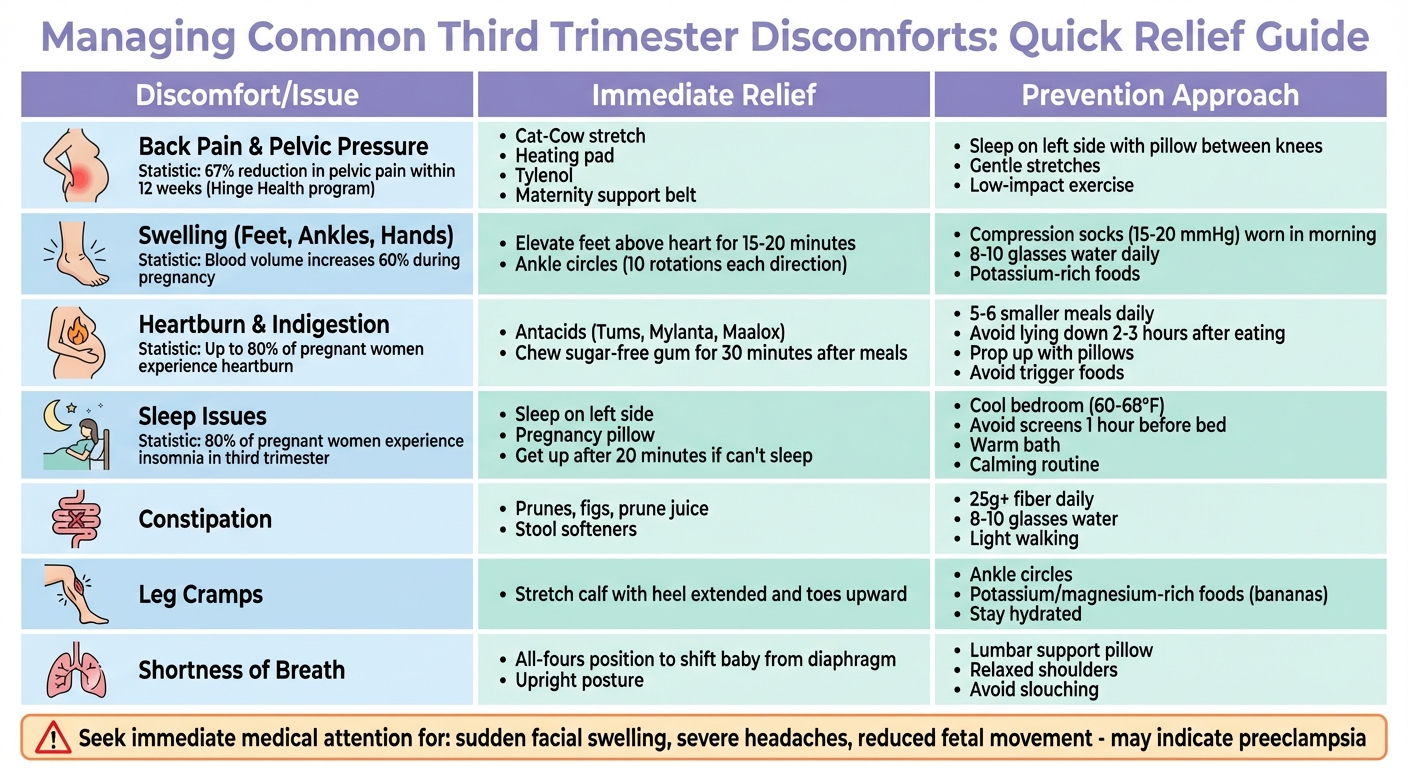
Third Trimester Discomfort Relief Guide: Symptoms, Immediate Relief, and Prevention
Managing Physical Discomforts
Relieving Back Pain and Pelvic Pressure
As your baby grows, your center of gravity shifts, putting extra strain on your lower back and pelvis. To ease this discomfort, gentle stretches can work wonders. The Cat-Cow stretch, for example, is great for improving spine flexibility and loosening tight lower back muscles. If getting down on the floor feels challenging, seated pelvic tilts on a chair or exercise ball can be a more comfortable alternative.
Dr. Renee Bullis, PT, DPT at Hinge Health, suggests:
If sitting in a chair becomes challenging as your baby grows, try performing these movements on a large exercise ball for added comfort.
Maternity support belts are another helpful option. They can redistribute some of the weight, easing pressure on your pubic bone and lower back. For better sleep, lie on your left side, place a pillow between your knees, and consider using a heating pad or gentle stretches. If needed, a moderate dose of Tylenol can also provide relief.
Participants in the Hinge Health pelvic health program have reported an average 67% reduction in pelvic pain within the first 12 weeks. Low-impact exercises like walking, prenatal yoga, and swimming can also improve circulation and reduce joint strain.
Beyond muscle and joint discomfort, many pregnant women experience swelling due to changes in circulation.
Reducing Swelling in Feet, Ankles, and Hands
Swelling often becomes more noticeable around week 30 of pregnancy. This happens because your blood volume increases by about 60%, and the growing uterus can slow circulation, causing blood to pool in your lower body.
Compression socks (15–20 mmHg) can help manage swelling, especially when worn first thing in the morning. Elevating your feet above heart level for 15–20 minutes several times a day can also make a big difference. Dr. Shivani Patel from UT Southwestern Medical Center notes:
If you elevate your feet right before bed, you'll likely have to get up right as you're falling into a deep sleep to use the bathroom!
Instead, try elevating your feet earlier in the evening. Staying hydrated by drinking 8–10 glasses of water daily helps flush out excess sodium, reducing swelling. Adding potassium-rich foods like bananas and natural diuretics such as watermelon and cucumbers to your diet can also help. If you’re sitting for long periods, simple exercises like ankle circles (10 rotations in each direction) can improve circulation.
However, be cautious of sudden swelling in your face or hands, as this could be a sign of preeclampsia. Contact your healthcare provider immediately if you notice these changes.
While managing physical strain and swelling, many expectant mothers also face digestive challenges like heartburn.
Easing Heartburn and Indigestion
During pregnancy, elevated progesterone levels relax the valve between the stomach and esophagus, and the growing uterus can push stomach acid upward, leading to heartburn. Up to 80% of pregnant women experience this discomfort. To alleviate symptoms, eat five to six smaller meals throughout the day and avoid lying down for at least two to three hours after eating.
Steer clear of trigger foods such as spicy, greasy, or fatty dishes, as well as citrus, tomatoes, chocolate, and carbonated drinks. Drinking liquids between meals instead of during them can prevent overfilling your stomach. At night, prop yourself up with pillows or elevate the head of your bed by about 6 inches.
Chewing sugar-free gum for 30 minutes after meals can also help, as it boosts saliva production, which neutralizes stomach acid. Over-the-counter antacids like Tums, Mylanta, and Maalox are generally safe during pregnancy, but avoid Pepto Bismol. If heartburn becomes severe or starts to interfere with your daily life, consult your doctor - sometimes it can be a sign of preeclampsia.
10 Minute Third Trimester Stretch - Relieve Discomfort and Stress During Pregnancy
Improving Sleep and Rest
As physical discomfort is addressed, focusing on better sleep becomes increasingly important during the third trimester. Around 80% of pregnant women experience insomnia during this stage Between constant bathroom trips, heartburn, leg cramps, and the difficulty of finding a comfortable position with a growing belly, getting quality rest can feel like a daily battle. However, small adjustments to your sleep position and creating a calming bedtime routine can make a noticeable difference.
Better Sleep Positions
Sleeping on your left side is often recommended during the third trimester. This position boosts blood flow to the uterus and placenta, supports kidney function to reduce swelling, and prevents the uterus from pressing against the liver. While sleeping on your right side is also considered safe, switching between sides can help avoid hip soreness. On the other hand, lying flat on your back is best avoided, as it can compress the inferior vena cava - a major blood vessel - leading to reduced circulation and even dizziness.
Strategic use of pillows can significantly improve your comfort. Placing a pillow between your knees and ankles aligns your hips and pelvis, easing lower back and hip pain. Adding a pillow under your belly supports your growing abdomen, while a wedge or body pillow behind your back can keep you from accidentally rolling onto your back during the night. If heartburn or shortness of breath is an issue, propping up your upper body with extra pillows can bring relief.
Dr. Jodi A. Mindell, a Psychology Professor at St. Joseph's University, explains:
During the second and third trimester, a growing belly can make finding a comfortable sleep position difficult, and heartburn, back pain and leg cramps can all disrupt sleep.
Pregnancy pillows can also provide targeted support and come in a variety of options. U-shaped pillows ($44.99–$89.99) offer full-body support, C-shaped pillows ($35.99–$69.99) are more compact, and wedge pillows ($20–$49.99) are ideal for belly or back support.
Once you’ve found a comfortable sleep position, pairing it with a relaxing bedtime routine can further improve your sleep quality.
Creating a Relaxing Bedtime Routine
A consistent bedtime routine helps signal to your body that it’s time to wind down. Start by managing your fluid intake - drink most of your water earlier in the day and taper off about two hours before bed to reduce nighttime bathroom trips. Avoid elevating your feet immediately before bedtime, as it may also contribute to more frequent trips to the bathroom.
Dedicate 30 to 60 minutes before bed to a calming pre-sleep ritual. A warm bath can soothe sore muscles and lower your core body temperature slightly, making you feel sleepy. Gentle stretching or prenatal yoga can help ease leg cramps and relieve pelvic pressure. Sipping on pregnancy-safe herbal tea or warm milk with a hint of lavender can also encourage relaxation.
Keep your bedroom cool - between 60°F and 68°F - as overheating is a common complaint during the third trimeste. Avoid screens for at least an hour before bed; blue light from devices can trick your brain into staying awake. If worries about labor or motherhood are keeping you up, jotting down a to-do list for the next day can help clear your mind.
If you find yourself unable to fall asleep after 20 minutes, get out of bed and do something quiet and calming, like reading, in low light until you feel drowsy again. As Dr. Darby E. Murphy from Northwestern Medicine notes:
With getting up to use the washroom, heartburn, restless legs and lower back pain, a lot of women will have fragmented sleep.
Although fragmented sleep is common, these strategies can help you make the most of the rest you do get. Studies show that women who sleep fewer than six hours in a 24-hour period during pregnancy may face a higher risk of longer labors and C-section deliveries. This makes prioritizing quality sleep more important than ever.
Addressing Digestive and Circulatory Issues
As the third trimester progresses, digestive and circulatory challenges can add to the discomfort many pregnant individuals experience. Constipation is a common issue, largely due to elevated progesterone levels that slow down intestinal activity. The growing uterus adds pressure on the intestines, while factors like iron supplements and reduced physical activity can exacerbate the problem. Dr. Darby E. Murphy from Northwestern Medicine Woodstock Hospital offers practical advice:
"In order to avoid constipation, Dr. Murphy recommends high-fiber foods and drinking plenty of water. Stool softeners are also safe to take. In order to avoid hemorrhoids, avoid constipation and straining, which can increase your risk."
Here are some actionable strategies to ease constipation and improve overall circulation during this stage.
Preventing and Relieving Constipation
To keep things moving smoothly, aim for at least 25 grams of fiber daily along with 8–10 glasses of water. High-fiber breakfast cereals (with a minimum of 5 grams of fiber per serving) can help soften stools. Natural remedies like prunes, figs, or prune juice are also effective at promoting regularity.
Getting some light exercise, such as walking, can stimulate your digestive system and encourage bowel movements. If you feel the need to go, don't delay - waiting can worsen constipation. For hemorrhoid relief, try witch hazel pads or over-the-counter hydrocortisone cream. Warm sitz baths and sleeping on your side can ease pressure on rectal veins, while switching to soft, unscented toilet paper or adult moist wipes helps avoid irritation.
Managing Leg Cramps and Shortness of Breath
Addressing leg cramps and breathing challenges is just as important for comfort during late pregnancy.
Leg cramps often occur at night, triggered by pelvic pressure on nerves, changes in circulation, or dehydration. When a cramp strikes, stretch your calf by extending your heel and pointing your toes upward. During the day, ankle circles - rotating your feet 10 times in each direction - can improve circulation in your lower legs. Including potassium-rich foods like bananas and magnesium-rich options in your diet can also help ward off cramps.
Shortness of breath is another common concern, caused by the uterus pressing against the diaphragm. To alleviate this, maintain an upright posture with relaxed shoulders to give your lungs more room to expand. Using a lumbar support pillow while sitting can encourage better alignment. For quick relief, get on all fours and let your belly drop - this shifts the baby away from your diaphragm temporarily, making it easier to breathe.
|
Issue |
Immediate Relief |
Prevention Approach |
|---|---|---|
|
Constipation |
Prunes, figs, stool softeners |
25g+ fiber daily, 8–10 glasses of water, walking |
|
Hemorrhoids |
Witch hazel pads, warm sitz baths, side-sleeping |
Avoid straining, use moist wipes, Kegel exercises |
|
Leg Cramps |
Stretch with heel extended and toes upward |
Ankle circles, potassium/magnesium-rich foods, hydration |
|
Shortness of Breath |
All-fours position, upright posture |
Lumbar support, relaxed shoulders, avoid slouching |
How Rumbly Products Support Third Trimester Comfort

As pregnancy progresses into the third trimester, the physical discomforts often intensify - pressure on joints, bladder, and digestion becomes a daily challenge[21]. Rumbly steps in to provide thoughtful relief with their curated pregnancy gift boxes, designed to address these late-pregnancy hurdles with practical and soothing self-care items. These products are a natural extension of the self-care practices already discussed, offering added comfort during this stage.
Self-Care Products for Comfort
Rumbly's gift boxes feature a selection of calming teas and body balms tailored to ease common third-trimester discomforts. For instance, ginger-based teas can help mitigate heartburn and indigestion, which affect over half of pregnant women during this phase. Lavender-scented lotions are included to encourage relaxation and promote better sleep - especially valuable when back pain and restless legs disrupt rest. Additionally, moisturizers and body balms help alleviate the itchiness caused by pregnancy-related rashes that often start on the abdomen and may spread as pregnancy progresses. These self-care items work hand-in-hand with practices like eating smaller meals and maintaining proper posture, adding an extra layer of relief to your daily routine.
Practical Items for Daily Challenges
Beyond self-care, Rumbly boxes include practical tools like compression socks and maternity support belts, which are key to managing late-pregnancy challenges. Compression socks improve circulation by helping blood flow back to the heart, reducing swelling in the feet and ankles - a problem exacerbated by the natural 60% increase in blood volume during pregnancy. Maternity support belts offer another layer of relief by redistributing the weight of your growing belly. Dr. Shivani Patel recommends:
Wear a support belt under and over the belly to relieve pressure on the hips and back.
These belts stabilize the spine and pelvic bones, easing lower back pain and pelvic pressure. Together, these practical items provide much-needed physical support, enhancing the overall experience offered by Rumbly's subscription boxes.
Trimester-Specific Subscription Boxes
Rumbly's subscription boxes are thoughtfully designed to meet the unique needs of each stage of pregnancy. For the third trimester, the boxes specifically address the discomforts and challenges that often peak during this time. Starting at $29.00 for the Just Found Out Maternity Gift and going up to $88.00 for the Hospital Bag Essentials, these boxes include items like specialized pillows for side-sleeping, nursing bras to accommodate breast growth and colostrum leakage, and postpartum recovery products to help you prepare for the journey ahead. Each box is a blend of self-care and practical solutions, ensuring you feel supported during this demanding phase of pregnancy.
Conclusion
The third trimester often comes with noticeable physical changes, and managing these discomforts is essential for both your well-being and your baby's development. For example, up to 80% of pregnant women experience heartburn, while back pain affects anywhere from 20% to 90%. These symptoms can disrupt your mobility, sleep, and overall quality of life during this crucial stage.
Thankfully, small adjustments can make a big difference. Staying hydrated, propping up your feet, and eating smaller, more frequent meals are simple ways to ease discomfort. Tools like maternity belts and body pillows can also provide extra support and help you feel more at ease throughout the day.
However, it’s important to know when certain symptoms require medical attention. Be vigilant about warning signs like sudden facial swelling or severe headaches - these could indicate serious complications, and you should contact your healthcare provider immediately if they occur. Similarly, if you notice reduced fetal movement, don’t hesitate to reach out to your doctor right away.
Sending hugs,
rumbly 💜
For extra support, Rumbly offers thoughtfully curated pregnancy boxes tailored for third-trimester comfort. These boxes include practical items like compression socks, support belts, and self-care essentials to help you manage common challenges. With prices ranging from $29.00 to $88.00, there’s an option to suit every need, whether you’re just entering the third trimester or preparing for delivery. Taking care of yourself now not only helps you feel better today but also sets the stage for a smoother, healthier journey as you prepare to welcome your baby.
FAQs
What symptoms during the third trimester could indicate a serious issue?
While it's common to feel some discomfort during the third trimester, certain symptoms shouldn't be ignored. Reach out to your healthcare provider right away if you notice any of the following:
-
Unusual vaginal discharge: This includes watery, bloody, or foul-smelling fluid.
-
Severe or persistent swelling: Particularly in your hands or face, or if resting doesn’t help reduce it.
-
Sudden or intense symptoms: Such as sharp pain, severe headaches, changes in vision, or trouble breathing.
These could be signs of complications that need immediate medical attention. If something doesn’t feel right, trust your gut and call your doctor.
What are safe ways to manage heartburn during the third trimester?
Heartburn often becomes a pesky companion during the third trimester, but there are safe and simple ways to manage it. Start by eating smaller meals more frequently, and steer clear of known triggers like spicy, fatty, or acidic foods, as well as caffeine. After eating, stay upright for at least an hour, and when it’s time to sleep, try propping yourself up slightly to reduce discomfort.
For relief, natural options can be helpful. Warm milk with a touch of honey, a handful of almonds, a serving of yogurt, or a small amount of ginger might do the trick. However, skip over-the-counter antacids unless your healthcare provider gives the green light, as not all are safe during pregnancy. If heartburn persists or worsens, it’s always best to check in with your doctor.
How can I sleep better during the third trimester of pregnancy?
Getting better sleep during the third trimester can feel like a challenge, but it starts with creating a cozy, supportive sleep space and tweaking your daily habits to tackle common pregnancy hurdles. One key tip: sleep on your left side. This position can boost blood flow while easing pressure on your back and major blood vessels. To make things even more comfortable, try a U-shaped or C-shaped pregnancy pillow, or tuck a wedge pillow under your hips to align your spine and relieve back pain. Also, aim to keep your bedroom cool - somewhere between 60–68°F - dark, and quiet. Opt for breathable bedding to enhance comfort.
To help your body settle in for the night, steer clear of heavy meals, caffeine, and too many fluids in the evening. These small changes can reduce heartburn and limit those frequent bathroom trips. Stick to a consistent sleep schedule, and if you’re feeling drained during the day, a short nap might help. Relaxation techniques, like a warm shower, gentle stretches, or deep breathing, can signal your body that it’s time to unwind. A light snack, such as a glass of milk, can also be soothing. Reserve your bed for sleep, and establish a calming bedtime routine - whether it’s reading a book or listening to soft music - to prepare your mind and body for rest. Small adjustments like these can make a world of difference in helping you wake up feeling more refreshed as your pregnancy progresses.