


Postpartum Recovery: Common Problems and Solutions
Most postpartum symptoms should slowly ease, not get worse. In the first days and weeks after birth, I’d expect soreness, bleeding, constipation, breast pain, heavy tiredness, and mood swings. What matters most is knowing what helps at home, and which warning signs mean it’s time to call a doctor.
Here’s the short version:
-
Pain and bleeding: Perineal pain, C-section soreness, and lochia are common early on. Bleeding should lighten over time, not increase.
-
Bathroom problems: Constipation and hemorrhoids often improve with water, fiber, short walks, probiotic foods, and stool softeners.
-
Breast issues: Engorgement, leaking, and sore nipples often respond to cold packs, frequent feeding or pumping, and latch support.
-
Exhaustion and mood changes: Sleep loss can leave you feeling tired but unable to settle down. If sadness, dread, irritability, or insomnia keep going, get help.
-
Recovery supplies: A few basics can make daily care easier, like a peri bottle, maternity pads, disposable underwear, nipple cream, ice packs, and a water bottle.
-
When to get medical care: Call your provider if symptoms intensify instead of improve, especially with severe pain, heavier bleeding, intrusive thoughts, heart palpitations, or new swelling.
A few facts matter here. The first 6 weeks after birth are often the hardest physically, and many mood changes are tied to sharp hormone shifts plus sleep loss. If you need support right away, Postpartum Support International: 1-800-944-4773 and 988 are listed for urgent mental health help.
So if I had to sum up the article in one line, it would be this: early postpartum recovery is often hard but expected; worsening symptoms are the line that should not be ignored.
Pain, Bleeding, and Bathroom Problems: Common Early Issues and Fixes
Soreness After Vaginal Birth or C-Section
After a vaginal birth, soreness in the perineal area can make sitting, walking, and even using the bathroom hurt. A C-section brings its own set of problems too, including incision pain and swelling. If that pain sticks around, talk with your provider about postpartum physical therapy or hands-on treatment for scar tissue or adhesions.
Bleeding and Lochia: What to Watch For
Postpartum bleeding, called lochia, is a normal part of recovery after birth. In most cases, it should get lighter over time, not heavier. If the bleeding starts increasing instead, reach out to your provider.
Constipation, Hemorrhoids, and Bathroom Discomfort
Constipation is common after birth, and it often starts with pressure on the intestines late in pregnancy along with hormone changes after delivery. That mix can slow digestion and make bathroom trips miserable.
A few simple things can help:
-
Drink water throughout the day
-
Eat high-fiber foods like oatmeal, chia seeds, and dried fruit
-
Add probiotic foods like yogurt
-
Take short daily walks to help get bowel movements moving
If pelvic pain keeps going or you think pelvic floor problems may be part of it, ask about pelvic floor physical therapy.
Once these early physical issues start to calm down, breast changes, fatigue, and mood shifts often become the next hard part. Taking time for self-care or receiving a pampering gift box for new moms can help ease this transition.
Breast Discomfort, Exhaustion, and Emotional Recovery
Breast Engorgement, Leaking, and Sore Nipples
In the first few days after birth, your breasts may feel swollen, hard, and tender as milk comes in. That pressure can be a lot. Cold compresses, frequent milk removal, and a supportive bra can help ease it.
Sore nipples and feeding pain often show up at the same time. In many cases, a poor latch or an awkward feeding position is part of the problem. That can also lead to back strain, which makes each feed feel even harder than it should.
Once feeding starts, fatigue can hit just as hard as breast pain.
Fatigue, Mood Swings, and Feeling Overwhelmed
Sleep loss can snowball fast. It often turns into that wired-but-exhausted feeling where you're tired, but your body still won't settle down. That can make mood swings and overwhelm feel worse.
A few simple things can help at home:
-
Rest in short blocks when you can
-
Share night duty with a partner
-
Keep one-handed snacks nearby, such as nuts, protein bars, cheese sticks, and dried fruit
Postpartum Recovery Items That Make Daily Care Easier
Items to Keep Within Reach at Home
The first few weeks after birth can make even small tasks feel like a lot. Keeping a few key items close by makes daily care simpler, especially when you're dealing with pain, bleeding, or feeding around the clock.
A good rule: set up the basics where you spend the most time, like your bed, couch, or bathroom. That way, you’re not getting up every few minutes to hunt for something you need.
Here’s a simple match-up of common postpartum issues and the items that can help most:
|
Postpartum Problem |
Helpful Recovery Item |
What It Does |
|---|---|---|
|
Perineal soreness |
Peri bottle, witch hazel pads, ice packs |
Gentle cleansing and cooling relief for swelling |
|
Bleeding (lochia) |
Maternity pads, disposable underwear |
Manages heavy flow comfortably |
|
C-section discomfort |
High-waisted disposable underwear |
Keeps fabric away from the incision site |
|
Hemorrhoids |
Witch hazel pads, stool softeners |
Reduces inflammation and eases bathroom discomfort |
|
Constipation |
Stool softeners, water bottle |
Supports digestion and hydration |
|
Sore nipples |
Nipple cream, breast pads |
Helps soothe cracked skin and absorbs leaks |
|
Breast engorgement |
Ice packs, nursing bra |
Reduces swelling and provides gentle support |
|
Hydration |
Water bottle |
Keep a water bottle nearby for hydration |
A Curated Gift Option for Postpartum Support
If you'd rather get one box instead of piecing things together item by item, a preassembled set can make life easier.
The Rumbly Postpartum Essentials Gift Box ($78) includes practical recovery items plus self-care support for the postpartum period. It’s available on rumbly.co and Amazon.
Postpartum Recovery Hacks I Wish I Knew Sooner (10 Tips from A Nurse)
When Postpartum Symptoms Need Medical Attention
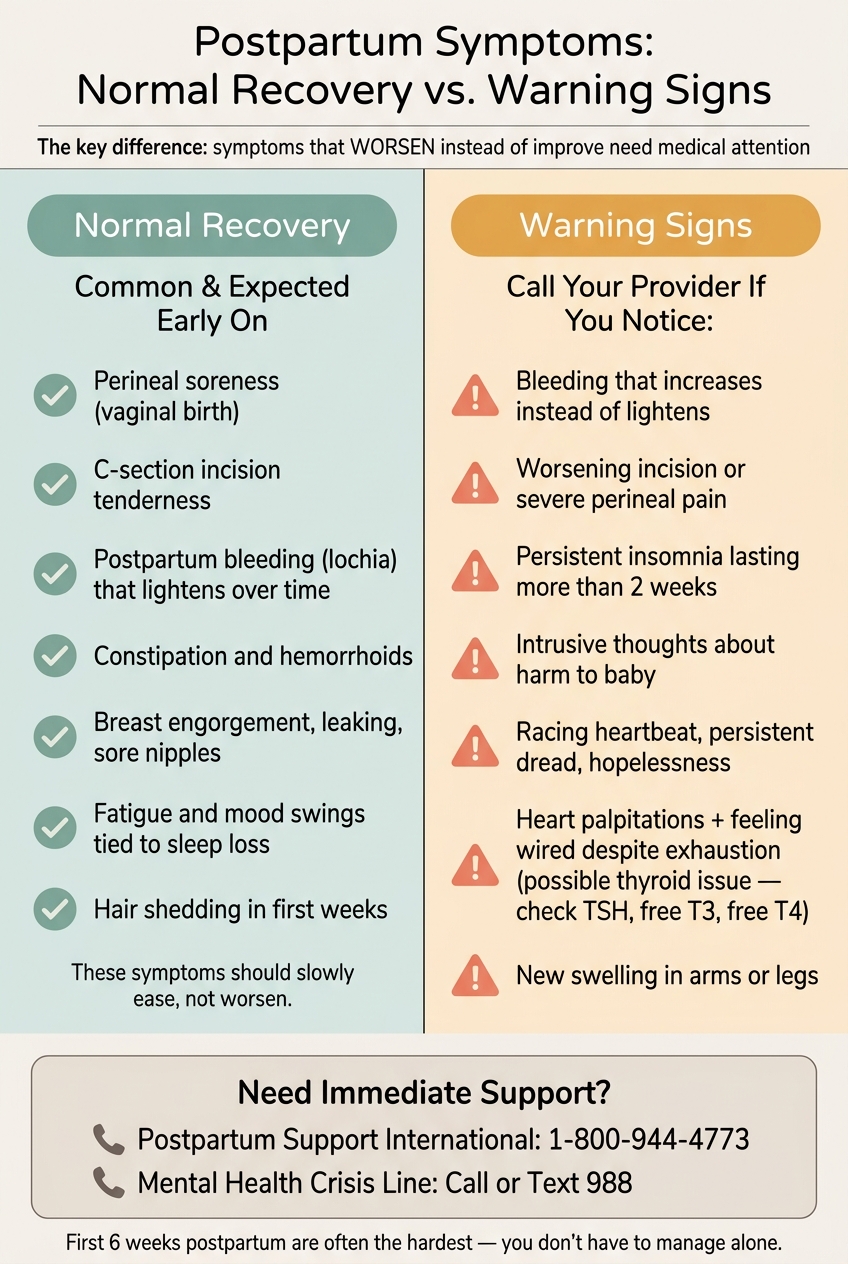
Postpartum Symptoms: Normal Recovery vs. Warning Signs
Warning Signs That Should Not Wait
Most postpartum discomfort starts to ease over the first few days and weeks. Some soreness, bleeding, bowel trouble, breast pain, fatigue, and mood changes are common at first. But if those symptoms start getting worse instead of slowly settling down, that’s not part of normal recovery.
Use this table as a simple way to tell the difference between routine healing and symptoms that need medical care.
If symptoms are getting worse instead of better, call your provider or seek urgent care.
|
Symptom |
Possible Concern |
|---|---|
|
Persistent insomnia lasting more than two weeks |
Postpartum insomnia, which can be linked to anxiety or depression |
|
Intrusive thoughts about harm coming to the baby, a racing heartbeat, persistent dread, severe mood swings, or hopelessness |
Postpartum anxiety or depression [ |
|
Heart palpitations, hair loss, or feeling "wired" despite being exhausted |
Postpartum thyroid dysfunction, which can mimic anxiety or depression - ask your doctor to check TSH, free T3, and free T4 levels |
|
Worsening incision pain or severe perineal pain |
A complication that should be evaluated by a professional |
|
New swelling in your arms or legs |
Lymphedema or another complication that should be checked |
If you have thoughts of harm or need immediate support, reach out to Postpartum Support International at 1-800-944-4773, or call or text 988.
Key Points to Remember During Recovery
Postpartum recovery can come with pain, bleeding, constipation, breast discomfort, fatigue, and mood shifts. Those issues are often part of early healing. The line changes when symptoms intensify instead of improve. At that point, home care isn’t enough, and it’s time to get medical help.
FAQs
How long does postpartum bleeding usually last?
The available information doesn’t include the usual length of postpartum bleeding. If you have questions about that or any other part of recovery, talk with your healthcare provider.
During this stage, Rumbly’s curated Postpartum Essentials Box can help support comfort and well-being as you move through the transition.
When should I worry about postpartum mood changes?
Mood swings, sadness, and feeling overwhelmed are common after childbirth. For many people, these feelings start in the first days after delivery and ease within a couple of weeks.
If those feelings don’t let up, it’s time to contact your healthcare provider. The same goes for severe mood swings, hopelessness, trouble sleeping even when your baby sleeps, scary intrusive thoughts, or feeling robotic and unable to cope.
Support is available, and you do not have to go through this alone.
What should I keep in a postpartum recovery kit?
A good postpartum recovery kit should help with physical healing, emotional support, and day-to-day comfort. A few simple items can go a long way, like a water bottle, caffeine-free tea, a mood journal, and a food diary.
If you're dealing with pain or having trouble with movement, talk to your OB-GYN about physical therapy. It can help more than many people expect. You may also want support for your mental health, such as Postpartum Support International, along with self-care products like those in the Rumbly Postpartum Essentials Box.