

How To Plan Baby Shower Activities Guests ACTUALLY Enjoy
The best baby shower activities are simple, low-pressure, and timed well. If I want guests to have a good time, I plan 3 to 4 activities for a 2- to 3-hour shower, use one easy icebreaker, one light group game, and one keepsake activity, and leave 5 to 10 minutes between parts of the event.
Here’s the short version:
-
I match activities to the guest list first, not the other way around.
-
I keep most games easy for mixed ages and make joining optional.
-
I put the most social game in the middle, then slow things down later.
-
I avoid anything too personal, awkward, or high-pressure.
-
I use unique baby shower prizes in the $5 to $20 range and end with a short thank-you.
A simple plan usually works best because most guests don’t want long, loud, or embarrassing games. They want to relax, talk, eat, and take part without feeling put on the spot. In many showers, 3–4 well-placed activities land better than packing the schedule with too much.
My takeaway: if I keep the schedule light, the games easy, and the tone welcoming, the shower is much more likely to feel fun from start to finish.
Build your activity plan before picking games
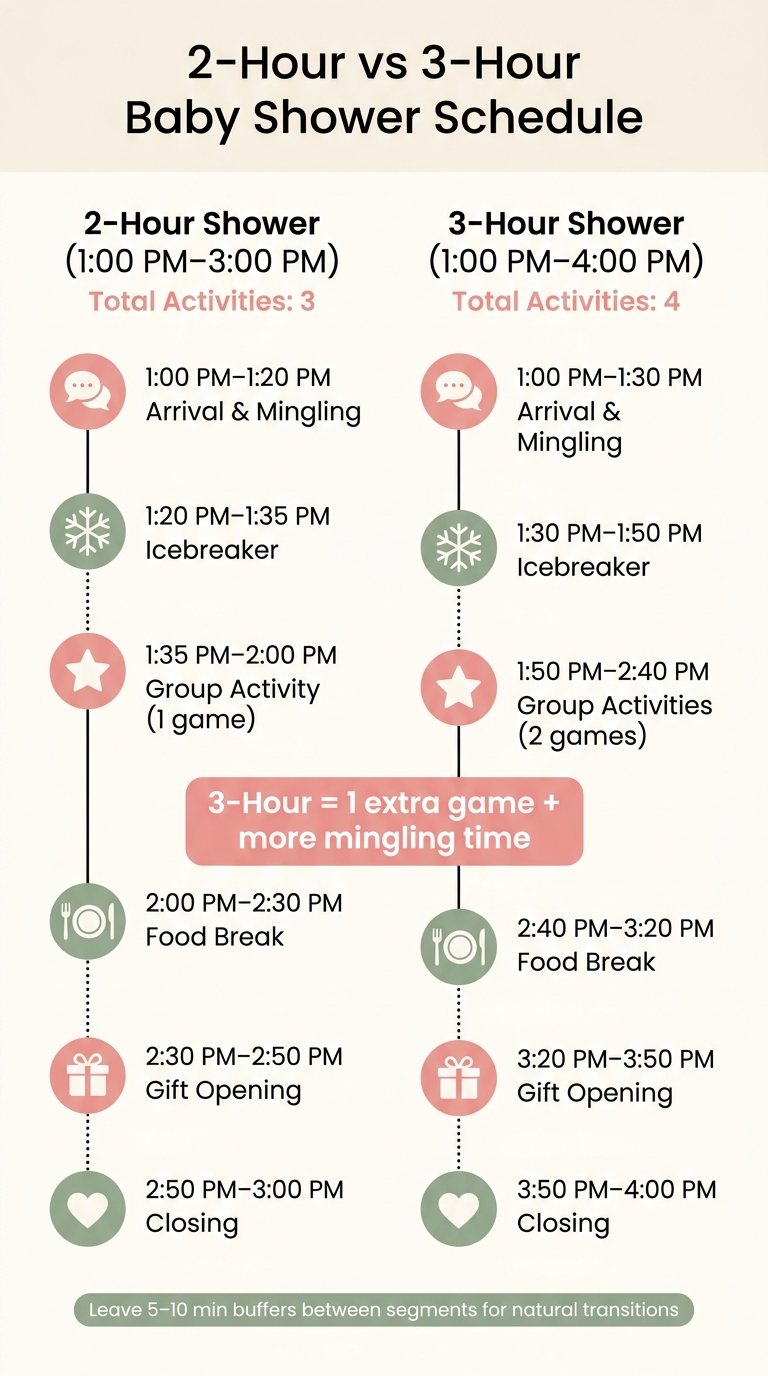
2-Hour vs 3-Hour Baby Shower Schedule: Activity Timeline
Before you pick games, map out the time you have and how many activities can fit into it. That’s what keeps the shower moving without feeling rushed or awkward. For a 2- to 3-hour shower, 3–4 activities is usually the right amount.
Use a simple 2-hour or 3-hour shower timeline
The overall flow matters more than any one game. A fun activity won’t land as well if the timing around it feels off. Start with the length of the shower, then decide how many activities fit.
|
Feature |
2-Hour Shower (1:00 PM–3:00 PM) |
3-Hour Shower (1:00 PM–4:00 PM) |
|---|---|---|
|
Total Activities |
3 activities |
4 activities |
|
Arrival & Mingling |
1:00 PM–1:20 PM |
1:00 PM–1:30 PM |
|
Icebreaker |
1:20 PM–1:35 PM |
1:30 PM–1:50 PM |
|
Group Activities |
1:35 PM–2:00 PM (1 game) |
1:50 PM–2:40 PM (2 games) |
|
Food Break |
2:00 PM–2:30 PM |
2:40 PM–3:20 PM |
|
Gift Opening |
2:30 PM–2:50 PM |
3:20 PM–3:50 PM |
|
Closing |
2:50 PM–3:00 PM |
3:50 PM–4:00 PM |
Once your timing is set, match each part of the shower with the right type of activity. Put food after your most interactive game. That tends to work well because people usually want a pause once a game ends, so the shift to snacks or a meal feels natural. It also helps to leave a 5–10 minute buffer between segments for bathroom breaks, drink refills, or a little catch-up.
Balance energy levels across the event
A baby shower usually feels best when the energy rises and then softens. Think of it in three parts: an easy start, a lively middle, and a calm finish.
Start with something low-pressure that guests can join as they walk in. A table activity or a simple card prompt does the job well. Then move into your most interactive game once most people have arrived and settled. End with a keepsake activity or gift opening, when the room is already calm and people are more at ease.
This kind of pacing helps because not everyone walks in ready to chat or jump into a game. Some guests need a few minutes to warm up. Others are ready to dive in right away. A gentle opener gives quieter guests space, while the middle of the shower gives more social guests something to get into. By the time gift opening starts, people usually feel more relaxed and connected.
With the schedule in place, you can start choosing activities that fit each slot.
Activities guests are most likely to enjoy
Now that the schedule is set, it’s time to pick what guests will actually do during each part of the shower. A simple way to keep things smooth is to use one quiet opener, one easy group game, and one keepsake activity. That mix gives you a nice rhythm without making the event feel packed or chaotic.
Match each moment to the flow you already planned: start calm, add a little energy in the middle, then wind things down with something guests can make or write.
Low-key icebreakers and table activities
These work best as arrival activities, when people are still finding seats, grabbing snacks, and settling in.
Advice cards are one of the easiest picks. Put cards and pens at each table and add a prompt like "One thing I wish I'd known before becoming a parent." Guests can fill them out whenever they want, and the mom-to-be gets a set of notes she can keep, which makes for a thoughtful pregnancy gift.
A clean version of Never Have I Ever can also work well, as long as the prompts stay light and steer clear of touchy subjects. It helps people swap harmless stories and start chatting without putting anyone on the spot.
If you want something seated and easy, a simple table quiz with familiar trivia is a safe bet. It gives mixed-age guests a way to join in without needing niche knowledge or a big competitive streak.
Interactive games that stay simple
Once most guests have arrived, one light group game usually fits best in the middle of the shower.
A baby-item price-guessing game is a good pick for mixed-age groups. Show printed baby-item cards and have guests guess the price of each one. It takes very little setup, and most people can jump in right away.
Use a baby-item relay only if you want some movement in the room. If you go that route, keep each round to 5–15 minutes and make it optional. That way, people who want to play can join, and people who’d rather sit and watch won’t feel pushed.
Activities that double as keepsakes
These fit nicely in the calmer second half of the shower, when the mood starts to slow down a bit.
Onesie or bib decorating gives guests something hands-on to do while the energy softens. Set out plain white onesies or bibs, fabric markers, and stencils. Each guest decorates one item, and the parents-to-be go home with a stack of meaningful baby shower gifts.
Letters to baby is a quieter choice, and it often means a lot. Guests write a short note to the baby, like a wish, a bit of advice, or a memory they hope to share someday, then seal it in an envelope. The parents can save the letters for a first birthday or another milestone.
Well-wishes for the parents works in much the same way, but the prompts focus on the couple instead of the child.
A simple flow usually works best:
-
Start with low-energy activities early
-
Put one active game in the middle
-
Save keepsake stations for the end
Keep activities comfortable and easy to run
Once you’ve picked the activities, make them easy to join. A good mix helps here: include a few group games, but pair them with opt-in options so people can take part without feeling pushed.
Avoid activities that may feel awkward or too personal
Some games sound fun at first, then feel a little uncomfortable once you put them in a room full of mixed ages, different personalities, and family dynamics. It’s best to skip anything tied to relationships, politics, health, or embarrassment.
Stick with neutral prompts instead, like travel, hobbies, or pop culture. And make it clear from the start that anyone can pass. That one small note takes the pressure off fast.
Offer opt-in stations and seated alternatives
Craft tables and message walls work especially well because guests can join when they’re ready and stay for as much or as little time as they want. There’s no big moment, no spotlight, and no need to jump in all at once.
Seated options also make a big difference. They give older relatives and quieter guests a way to take part without standing, moving around, or competing.
With the activities kept low-pressure, you can finish with small prizes and a simple closing. You might even include pregnancy care package essentials as special rewards for the winners.
Add prizes, favors, and a simple closing plan
As the shower winds down, wrap things up with a quick prize handoff and a calm thank-you. It gives the ending a clear shape and ties the last activity back to the rest of the event without adding extra work.
Choose small prizes that feel useful
Plan on $5 to $20 per winner. The good news? Prizes don't need to cost much to feel nice. In most cases, the best ones are simple items guests can use right away.
|
Prize Category |
Examples |
|---|---|
|
Wellness & Self-Care |
Candles, bath bombs, mini lotions, tea |
|
Edible Treats |
Gourmet chocolates, specialty cookies, mini jam jars |
|
Practical Items |
Gift cards ($5–$10), stylish notebooks |
Set everything out ahead of time before the last game ends. Then have one host announce the winners and move right into the thank-you. Short, easy, done.
Use self-care touches that support the mom-to-be
For the mom-to-be, finish with a small wellness gift. You might also consider a postpartum essentials gift box to help her through the fourth trimester. Rumbly's curated pregnancy and new mom gift boxes are an easy self-care option for the guest of honor.
Conclusion: Keep the schedule light, the games flexible, and the mood welcoming
Start with who's coming and what they'll feel comfortable doing. Plan two or three well-timed activities, mix quiet opt-in options with one or two light group games, and end with a brief thank-you that puts the focus back on the mom-to-be. If guests head home feeling relaxed and happy, the shower did its job.
FAQs
How do I choose activities for a mixed-age guest list?
Choose activities that are easy for almost anyone to join, without needing special knowledge or physical skill. Adjust the rules to fit the group. For kids, you might swap tokens for candy. For more formal groups, you can steer questions toward travel, hobbies, or other light topics that feel easy to talk about.
It also helps to pick activities with broad appeal that draw people in. Keep teams small, ideally 3 to 4 people, so guests can take part without feeling swamped or left out.
What should I do if guests don’t want to join games?
Let guests skip a game - or opt out altogether - if they’re not into it. Pushing people to join can make things awkward and chip away at the fun.
When people know they can say no at any point, the whole baby shower feels more relaxed, easygoing, and enjoyable for everyone.
How can I make baby shower activities organized but relaxed?
Keep the pace steady and easy to follow. Short 5- to 10-minute breaks between activities give guests time to reset, grab a drink, or chat without feeling rushed.
It also helps to have a host or guide move things along. They can handle transitions, give short directions, and keep everything from dragging. Serve simple one-hand foods so people can snack without juggling plates and utensils.
Most of all, keep the setup low-pressure. Let guests skip any activity if they want, and make the tone light and welcoming.