


Ultimate Guide to Second Trimester Wellness
Weeks 13–27 are often easier than the first trimester, but they still take daily care. If I want this stage to feel steadier, I need to focus on four things: food, fluids, movement, and rest - and I need to know which symptoms are normal and which ones mean I should call my doctor.
Here’s the short version:
-
I may need about 340 extra calories per day
-
I should aim for 150 minutes of moderate exercise each week
-
Common issues include constipation, swelling, leg cramps, congestion, hemorrhoids, and sleep trouble
-
Key check-ins during this stage often include quickening at 16–20 weeks and the anatomy scan at 18–22 weeks
-
I should get medical help fast for sudden face or hand swelling, severe pain, fever that does not go away, low fetal movement, or signs of depression
The day-to-day plan is simple: eat balanced meals, drink water often, stay active in low-impact ways, sleep on my left side when I can, and make small work or travel changes to cut strain. Just as important, I should pay attention to mood shifts and ask for help early if stress or sadness starts to take over.
That’s the core of second trimester wellness, and it gives me a clear way to handle this part of pregnancy with less guesswork.
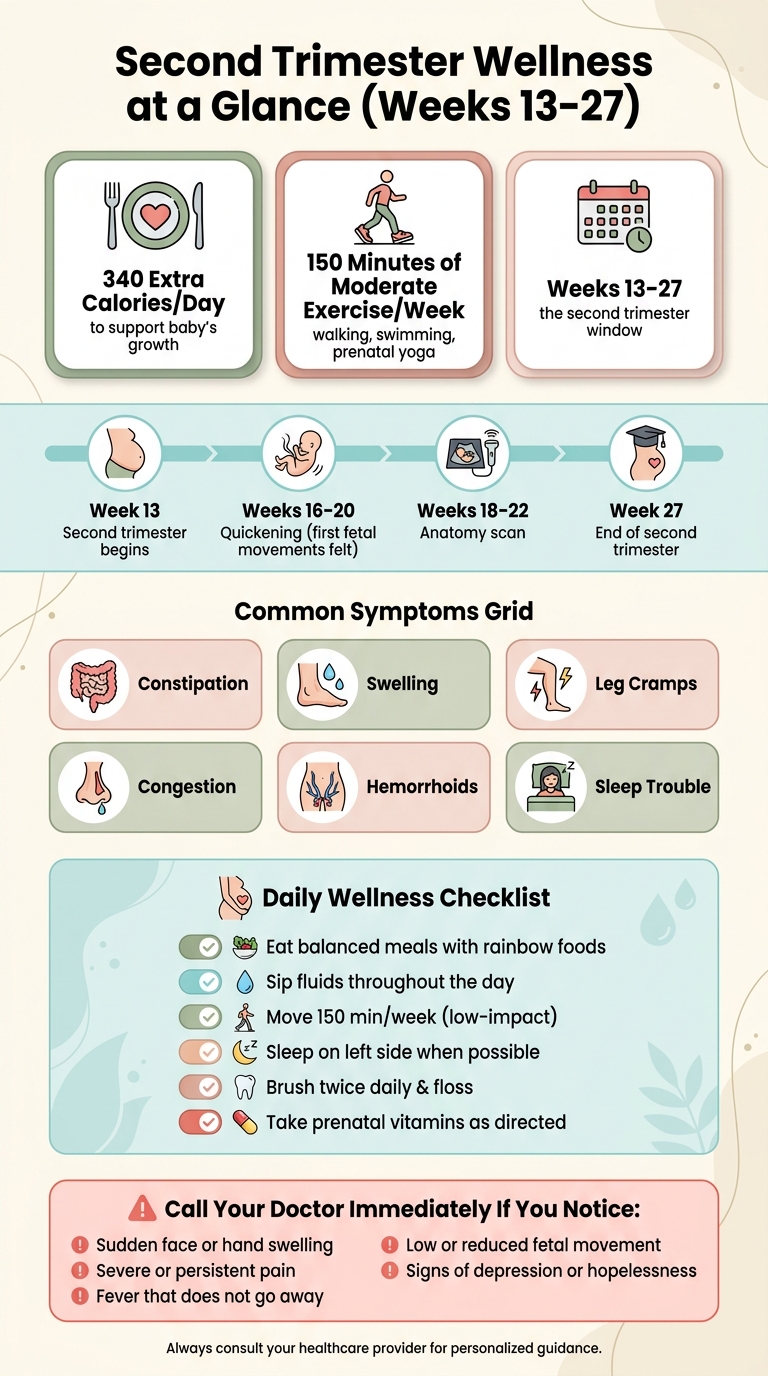
Second Trimester Wellness: Key Numbers & Daily Essentials
Build a Daily Wellness Routine That Supports Pregnancy
Eat for steady energy and key nutrients
Many pregnant women need roughly 340 extra calories a day to support the baby’s growth. The goal isn’t to eat a lot more. It’s to eat with purpose.
Build meals around grains, vegetables, fruits, dairy, and lean proteins. Pay close attention to iron, calcium, choline, folate, vitamin D, and fiber. Your prenatal vitamin can help cover gaps, but food still does most of the heavy lifting.
It also helps to eat "rainbow foods" - colorful produce that gives you a broader mix of antioxidants. Just make sure fruits and vegetables are washed well before you eat them.
During weeks 13–27, a few food-safety habits matter most:
-
Beverages: Stick to water, electrolyte-rich fluids, and pasteurized juices. Avoid alcohol - there is no safe amount during pregnancy - and avoid unpasteurized milk.
-
Proteins: Choose lean meats, beans, eggs, and cooked seafood. Skip raw sushi and cold deli meats unless they’ve been reheated until steaming, which helps lower the risk of Listeria.
-
Produce: Eat a mix of colorful fruits and vegetables, and wash them thoroughly. Avoid unripe papaya and any other foods your provider has told you to avoid.
-
Supplements: Take folic acid, iron, calcium, vitamin D, and your prenatal vitamin as directed. Avoid high-dose vitamin A and herbal supplements your provider hasn’t approved.
Hydration, movement, and oral health in a daily routine
Staying hydrated is one of the simplest ways to support pregnancy. As Dr. Nellie Balfour, Specialist Pediatrician, says:
"Dehydration is the one thing though, that we usually don't want to run into because it carries other problems. It can cause preterm labour."
Sip fluids across the day to help with hydration and to ease constipation.
For movement, about 150 minutes of moderate exercise per week is a solid target if your provider has cleared you for activity. Walking, swimming, prenatal yoga, and stationary cycling are all good low-impact choices. Swimming can feel especially good because the water supports your growing belly and may help with swelling. Even a short 10-minute walk after dinner can help digestion and offset the sluggish feeling progesterone can cause in your gut.
Pregnancy can also make your gums more sensitive. Brush twice a day and floss daily.
With these basics in place, second trimester symptoms often feel less hard to handle.
Simple self-care habits for busy weeks
Small habits can make a big difference, especially when life feels packed. Keep healthy snacks prepped and easy to grab so you’re less likely to skip meals. Including pregnancy care package essentials in your routine can also provide much-needed support. Wear supportive clothing to make long days easier on your body. And as your belly grows, a pregnancy pillow can help take the edge off sleep discomfort.
These simple routines can make the next few months feel more doable.
Taking Care of Yourself During Your Second Trimester of Pregnancy
Manage Common Second Trimester Symptoms Safely
Even with a good routine, some second-trimester symptoms need a bit more direct relief.
Round ligament pain, swelling, leg cramps, and constipation
Round ligament pain often gets better when you change positions slowly and give your body a chance to rest. If the pain is severe or doesn’t let up, call your provider.
Swelling in the feet and ankles is common during pregnancy. Putting your feet up when you sit and swimming may help with fluid retention. But sudden swelling in your face or hands is different. That can point to preeclampsia, so contact your provider right away.
Leg cramps may ease with gentle calf stretches and by staying hydrated. Sometimes small habits make the biggest difference.
Constipation is also common because progesterone slows digestion. Fiber-rich foods and a 10-minute walk after meals can help keep things moving.
Congestion, skin changes, hemorrhoids, and sleep discomfort
Pregnancy congestion is common, and saline nasal spray is a safe first step.
Skin changes, like dark patches or stretch marks, are a normal response to shifting hormones and a growing belly. It’s one of those changes that can feel odd, even when it’s expected.
Hemorrhoids can be painful and frustrating. Try not to sit for long stretches or strain during bowel movements, and get enough fiber to help cut down on discomfort.
Sleep can get trickier as your body changes. Left-side sleeping is usually best because it supports circulation . If your hips or shoulders are sore, put a pillow between your knees. Sleeping on your back for a short time is usually okay, but it can press on a major blood vessel and reduce blood flow to the baby. And as your belly grows, stomach sleeping often just stops feeling good. A pregnancy pillow with a center cutout may help.
When discomfort starts messing with your sleep or mood, emotional support and thoughtful pregnancy gifts matter too.
Support Emotional Well-Being and Reduce Stress
The second trimester often feels a bit easier on the body. But that doesn't mean stress disappears. Poor sleep, nagging discomfort, and hormone shifts can still hit hard, and mood changes may still show up.
Daily habits that protect mood and reduce overwhelm
Small daily habits can make a big difference. Movement helps a lot. Walking, swimming, or prenatal yoga can lower stress and improve energy. If your mind feels crowded, journaling can help you sort through what you're feeling without pressure. Pregnancy groups can help too. Talking with other mothers often makes the whole experience feel less lonely.
Sometimes that still isn't enough, and that's okay. If stress keeps piling up, therapy can help. It can also help to cut back where you can. Try picking one or two things to remove, postpone, or hand off to someone else so your mental load doesn't get too heavy.
How partners and family can offer useful support
Support isn't just about being nice. It helps most when it's practical too. Partners who handle errands, cook a few meals each week, or go to prenatal appointments can ease the feeling of carrying everything alone. That kind of steady presence matters.
Talking or reading to the bump can help as well. It's a simple way to make the pregnancy feel more shared and can help build the partner's connection with the baby.
When emotional changes need professional attention
Mood swings can be normal in pregnancy, but some signs need fast attention. Contact your provider right away if you notice:
-
Persistent hopelessness
-
Anxiety that disrupts daily life or causes panic
-
Withdrawing from people you care about
-
Losing interest in the pregnancy
-
Any thoughts of self-harm
"Any feeling of hopelessness during pregnancy is a red flag. Talk to someone. Tell your gynaecologist. Do not wait."
If any of these signs sound familiar, contact your healthcare provider or a mental health professional now. Don't wait for your next scheduled appointment.
Once stress feels more under control, the next priority is staying safe at work, while traveling, and in daily life.
Stay Safe at Work, While Traveling, and in Daily Life
Safe activity, work adjustments, and travel basics
After symptom management and day-to-day routines, the next step is cutting down strain at work, during travel, and in daily life.
A few small changes can go a long way. At work, skip heavy lifting and break up long stretches of standing. If you spend most of the day at a desk, stand up and move at regular intervals instead of staying planted in one spot for hours.
Travel matters too. On long car rides or flights, take stretch breaks often to keep your blood flowing. And if you're driving, place the seat belt low across your hips, below your belly, never across your abdomen.
Hydration is a big deal here. Drink water often, since dehydration can increase pregnancy risks. It's also smart to avoid getting too hot and to treat a fever quickly, because both can increase pregnancy risk. A pregnancy-safe option like acetaminophen can help manage fever.
Here’s a quick side-by-side guide:
|
Activity Type |
Generally Safe With Modifications |
Typically Avoid |
|---|---|---|
|
Travel |
Air or car travel with frequent stretch breaks, proper seat belt positioning |
Remote areas without access to medical care, long stretches without moving |
|
Daily tasks |
Light chores and desk work with movement breaks |
Heavy lifting and long standing without breaks |
Conclusion: The core habits that matter most in the second trimester
The main habits are pretty simple: stay hydrated, keep moving safely, and make smart work and travel adjustments. Just as important, know when to call your provider. Reduced fetal movement, a fever that doesn't go away, or signs of prenatal depression should not be brushed off.
Done on a steady basis, these steps can help the second trimester feel more stable and easier to handle.
FAQs
How much weight gain is normal in the second trimester?
During the second trimester, your healthcare provider will keep an eye on your weight gain to help support a healthy pregnancy for both you and your baby. Gaining too much or too little weight can affect fetal development.
There isn't one normal number that fits every pregnancy. Each person starts from a different place, and that matters. Talk with your OB-GYN or midwife about what makes sense for your body, your health history, and your pregnancy goals.
Which over-the-counter remedies are safe during the second trimester?
Always check with your OB-GYN or healthcare provider before taking any over-the-counter remedy during the second trimester.
Some digestive enzymes, such as lactase and alpha-galactosidase, are generally seen as low-risk. For respiratory infections, acetaminophen and vitamin C are generally recognized as safe for symptom relief.
That said, every pregnancy is different. Talk with your doctor before taking any medication or supplement.
When should I call my doctor about second trimester symptoms?
Contact your healthcare provider if you feel hopeless or notice signs of prenatal depression. And before you start any new supplements, including digestive enzymes, check with your doctor first.
If you're worried about your baby's movement, try eating something sweet or lying on your left side. Still concerned? Son't hesitate and check in with your doctor.