


How Omega-3 Helps Baby's Growth
Omega-3 helps build your baby’s brain and eyes, and the biggest need comes late in pregnancy. If I had to sum this up in one line, it’s this: getting about 200 mg of DHA a day during pregnancy can help support fetal growth, especially for the brain, eyes, and nervous system.
Here’s the short version:
-
DHA is the main omega-3 to focus on during pregnancy.
-
EPA also matters, but DHA gets most of the attention for baby’s brain and eye growth.
-
ALA comes from plant foods like flaxseed, chia seeds, and walnuts, but the body only turns a small amount into DHA and EPA.
-
Your baby gets omega-3 through the placenta, with the biggest transfer in the third trimester.
-
Food sources include low-mercury fish, fortified eggs, and some fortified milks.
-
If you don’t eat fish, algal oil DHA is a plant-based option.
-
A simple goal is 2–3 servings of low-mercury fish per week or a DHA supplement if food intake is low.
A few facts stand out. The article notes that brain growth is at its highest in the last trimester and first two years of life, and that 30 to 32 weeks is a key point for eye response to light. That’s why steady intake matters across pregnancy, not just at the end.
If I were keeping this simple, I’d think about omega-3 in three parts: what type matters, when baby needs it most, and how to get enough from food or supplements.
|
Focus area |
What to know |
|---|---|
|
Main omega-3 |
DHA |
|
Daily target |
200 mg DHA |
|
Peak need |
Third trimester |
|
Best food source |
Low-mercury fish |
|
Plant option |
Algal oil DHA |
|
Plant foods |
Walnuts, chia, flax, soy |
So before getting into the details, the main takeaway is clear: steady DHA intake during pregnancy helps cover a key part of your baby’s growth, and food plus supplements can both help you get there.
How Omega-3 Supports Baby's Development Each Trimester
First and Second Trimesters: Brain, Nerve, and Cell Development
Omega-3 starts doing its job early. In the first trimester, DHA helps build the cell membranes that support early brain and nerve development. That matters because these structures begin forming right away, often before someone even knows they're pregnant.
By the second trimester, development picks up speed. The senses are forming fast, and DHA supports the growth of organs and senses. Early intake matters for a simple reason: baby’s development doesn’t wait.
By late pregnancy, the demand rises even more.
3rd Trimester: Peak DHA Needs for Brain and Eye Growth
The third trimester is when DHA demand peaks. During late pregnancy, the brain grows fast and becomes more complex. DHA also plays a key role in eye development. Fetal eye movements become more frequent in late pregnancy, which is considered vital for visual brain development. By 30 to 32 weeks, fetal pupils begin to contract in response to bright light.
The recommended daily intake during pregnancy is 200 mg of DHA. If your diet doesn’t regularly include low-mercury fish or other DHA-rich foods, a prenatal supplement with DHA may help fill that gap.
What Research Says About Birth Weight, Gestation Length, and Preterm Birth
Research looks beyond development alone. It also looks at pregnancy outcomes. Mothers with poor maternal nutrition are more likely to have babies with lower birth weights or babies born premature.
When maternal nutrient stores get too low, the body tends to prioritize the fetal brain, sometimes at the expense of other organs, such as the heart. Adequate DHA intake is linked with better pregnancy outcomes, especially when intake starts out low.
Best Omega-3 Food Sources During Pregnancy
Now that you know why DHA matters, here are the foods that deliver it in the most direct way.
Low-Mercury Fish with DHA and EPA
Fatty fish is the main food source of DHA and EPA. Salmon, tuna, and snapper are solid omega-3 picks during pregnancy. A simple goal is to eat fish two to three times a week and switch between a few easy options.
That variety helps keep meals from getting boring, and it also makes weekly planning a lot easier.
Plant Sources: Walnuts, Chia Seeds, and Flaxseed
On days when fish isn’t on the menu, plant foods can help fill part of the gap. These foods give you ALA, which the body converts into DHA and EPA only in small amounts. Walnuts, chia seeds, ground flaxseed, canola oil, and soybeans all contain ALA.
That’s why it makes sense to treat them as backup omega-3 sources, not stand-ins for DHA-rich foods. You can stir ground flaxseed into oatmeal, toss walnuts into a salad, or use canola oil for daily cooking.
When fish isn’t part of the plan, these foods can help support your weekly omega-3 intake.
Fortified Foods and Simple Meal Ideas
Fortified foods can help cover smaller omega-3 gaps. Enriched milk, fortified plant milks, and fortified eggs can slide into everyday meals without much effort. Check the label for fortified or enriched, since not every version includes DHA.
It helps to think in terms of a weekly pattern instead of leaning on one item over and over.
|
Source |
Omega-3 Type |
|---|---|
|
Salmon |
DHA and EPA |
|
Walnuts |
ALA |
|
Chia seeds |
ALA |
|
Ground flaxseed |
ALA |
|
Fortified eggs |
DHA, if fortified |
|
Canola oil |
ALA |
If food alone doesn’t cover your needs, prenatal DHA supplements are the next step.
When Omega-3 Supplements Make Sense
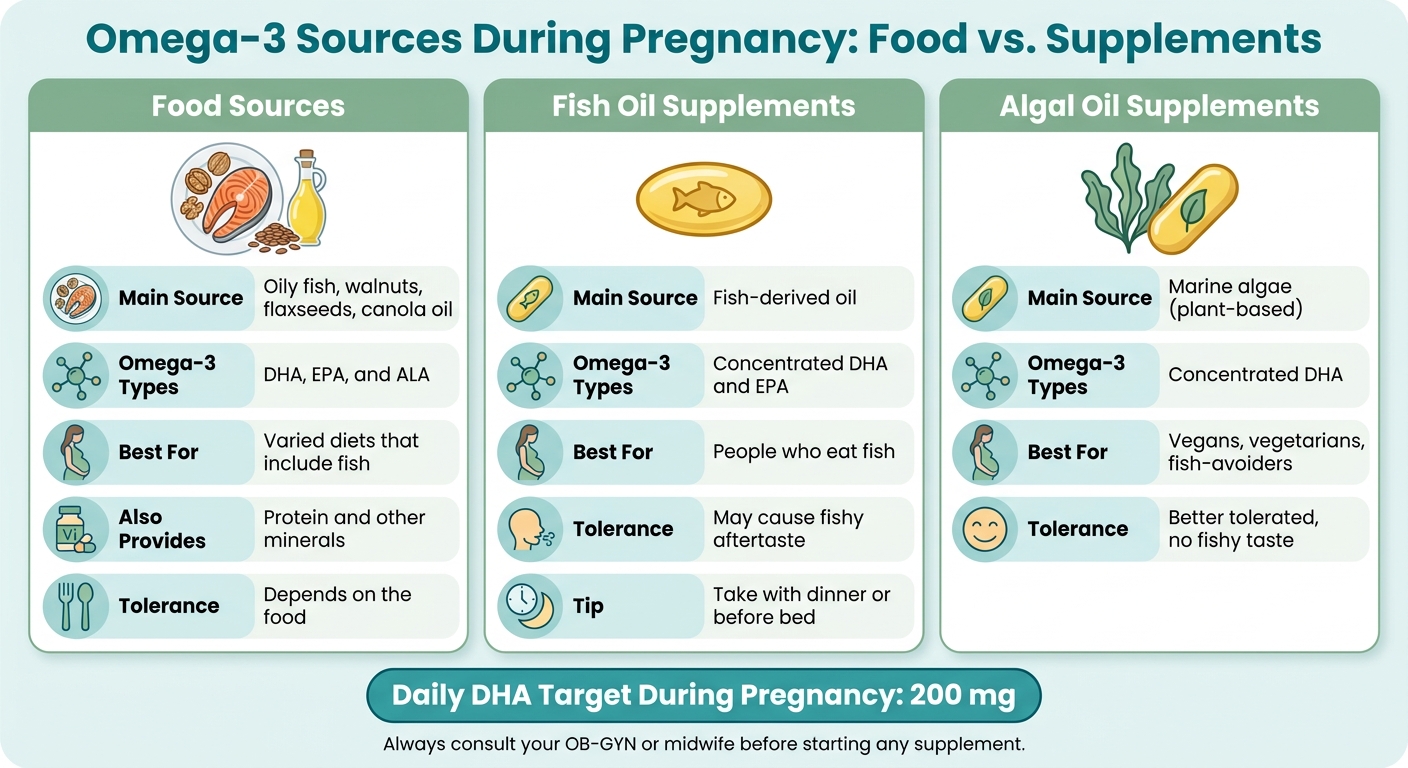
Omega-3 Sources During Pregnancy: Food vs. Supplements Compared
If food alone doesn't cover your DHA needs, supplements can help fill the gap. That matters because DHA supports your baby's brain and eye growth. The aim is simple: keep DHA intake steady when diet alone falls short.
Fish Oil, Algal Oil, and Prenatals with DHA
The main options are fish oil, algal oil, and prenatals with DHA.
Fish oil capsules provide concentrated DHA and EPA. Algal oil comes from marine algae, so it's a fully plant-based choice that works well for vegetarians, vegans, or anyone who doesn't eat fish. Some prenatal vitamins also include DHA, which can make your routine a little easier.
The next step is figuring out how much to take and what to check before adding anything new.
Intake Ranges and Safety Points to Discuss with Your Provider
A commonly cited target during pregnancy is 200 mg of DHA per day. Don't go past the dose your provider recommends. It's also smart to choose purified products that have been third-party tested.
Some people notice a fishy aftertaste or mild stomach upset. Taking the supplement with dinner or right before bed can help with both.
Always talk through any new supplement with your OB-GYN or midwife, especially if you have allergies, a chronic condition, or take other medications.
Food vs. Supplements: How Each Option Compares
The table below compares food and supplement sources across the factors that tend to matter most during pregnancy planning.
|
Feature |
Food Sources |
Fish Oil Supplements |
Algal Oil Supplements |
|---|---|---|---|
|
Main Source |
Oily fish, walnuts, flax seeds, and canola oil |
Fish-derived oil |
Algae-based, plant-friendly |
|
Dietary Fit |
Varies by diet |
People who eat fish |
Vegans, vegetarians, avoid fish |
|
DHA Focus |
DHA, EPA, and ALA, plus protein and other minerals |
Concentrated DHA and EPA |
Concentrated DHA |
|
Tolerance |
Depends on the food |
May leave a fishy aftertaste |
Better fit for people who avoid fish |
If fish is tough to fit into your meals, algal oil or a prenatal with DHA can help cover the gap. From there, you can shape a weekly routine around the foods and supplement that match the way you eat. Next, turn these options into a simple weekly routine.
A Simple Omega-3 Plan for Pregnancy and Postpartum
A Weekly Routine Using Fish, Nuts, Seeds, and Supplements
A simple routine works better than trying to make every meal perfect.
Aim for two to three servings of low-mercury fish each week. Then add ALA-rich foods each day, and use DHA if you need help hitting your target. That steady pattern helps keep DHA available during the months when your baby's brain and eyes are growing fastest.
Here are a few easy ways to make it part of normal meals:
-
Add 1–2 tablespoons of ground flaxseed or chia seeds to oatmeal, yogurt, or smoothies.
-
Switch your usual cooking oil to canola oil for an easy omega-3 boost.
-
If you're still falling short on DHA, take a fish oil or algal oil supplement with a meal.
The big win here is consistency. A weekly pattern is much easier to stick with than chasing one perfect meal.
Omega-3 Options for Vegetarian, Vegan, or Don't-Eat-Fish Diets
If you don't eat fish, you can follow the same basic plan with plant foods and algal oil.
Walnuts, flaxseeds, chia seeds, and soybeans all provide ALA. That helps, but plant foods give you ALA, not much preformed DHA. So an algal oil DHA supplement can help fill that gap.
When you check labels on fortified foods or prenatal vitamins, look for products that list at least 200 mg of DHA. If your prenatal doesn't include DHA, a separate algal oil capsule is a simple add-on to bring up with your provider.
Conclusion: Key Points to Remember
The goal is steady intake, not perfect meals. DHA supports your baby's brain and eye development, especially in late pregnancy and during breastfeeding. For ongoing support throughout your journey, consider a pregnancy subscription box tailored to your needs. Low-mercury fish, plant foods, and algal oil can all play a part.
FAQs
Can I get enough DHA without eating fish?
Yes. Fish is a common source of DHA, but it’s not your only option.
You can also add plant-based foods like walnuts, flax seeds, almonds, hazelnuts, avocado, and soybeans to your diet.
If you don’t eat fish, fish oil supplements can also help you meet your daily DHA needs.
Which fish are safest during pregnancy?
Fish is a good source of omega-3s like DHA, which help support your baby’s brain and eye development.
That said, the sources here don’t name which fish are the safest to eat during pregnancy.
In general, experts suggest eating fish two to three times per week. For advice that fits your health needs, talk with your healthcare provider.
Should I keep taking DHA after birth?
DHA is an omega-3 fatty acid that helps support brain and eye development in fetuses and nursing infants. And it still matters after birth as part of day-to-day nutrition.
For your own postpartum needs and supplement routine, talk with your healthcare provider.