


Ultimate Guide to Pregnancy Stretch Mark Care
I can say this upfront: no skin care routine can fully stop pregnancy stretch marks. What I can do is help you focus on what works best during pregnancy: daily moisture, less itch, less dryness, safe ingredients, and a plan for after delivery.
Here’s the short version:
-
Stretch marks often start around week 17
-
Higher pre-pregnancy BMI and fast weight gain can make them more likely
-
During pregnancy, fragrance-free moisturizers can help with comfort
-
Retinoids, including retinol, are usually avoided during pregnancy
-
After delivery, retinoids, lasers, microneedling, and microdermabrasion may help improve color and texture
-
No treatment removes stretch marks 100%, but some can help them fade over time
If you want the simplest plan, this is it:
-
Moisturize the belly, breasts, hips, and thighs every day
-
Wear soft, breathable clothing
-
Drink enough water and eat foods with vitamin C, vitamin E, and omega-3s
-
Skip retinoids while pregnant unless your doctor says otherwise
-
If you want treatment later, talk with a dermatologist after birth
The main goal during pregnancy is comfort, not perfect skin. After delivery, you can look at treatment options based on your budget, skin, and how much change you want.
A quick look at postpartum treatment options:
|
Option |
Cost |
Downtime |
Best for |
|---|---|---|---|
|
Topical retinoids |
$10–$150+ |
None |
Early red marks |
|
Microdermabrasion |
$75–$200/session |
Minimal |
Early surface texture |
|
Microneedling |
$200–$700/session |
1–3 days |
Texture and mixed marks |
|
Laser therapy |
$200–$1,000+/session |
1–5 days |
Color and texture |
That’s the full picture in plain terms: during pregnancy, keep it simple and safe. After pregnancy, if stretch marks still bother you, treatment options open up.
Can You Prevent Stretch Marks? A Dermatologist Explains Causes & Treatments | Dr. Sam Ellis
Daily skin care during pregnancy: prevention, comfort, and support
A steady daily routine can help calm itch, cut down on dryness, and keep skin more comfortable as it stretches.
A simple moisturizing routine for belly, breasts, hips, and thighs
Use a fragrance-free moisturizer at least once a day, ideally at night. Apply it to the belly, breasts, hips, and thighs.
That simple step gives your skin regular support day after day. Once you’ve got that routine in place, the next step is picking products that are safe to use during pregnancy.
Weight gain, hydration, and nutrition for skin health
Hydration and diet play a part too. Drink enough water and eat a balanced diet with vitamin C, omega-3s, and vitamin Eto support skin health. These nutrients help support overall skin health.
Habits that reduce skin irritation and friction
Small daily habits can make a difference. Wear soft, breathable clothing and skip tight seams that rub against the skin.
Next: which ingredients are safe during pregnancy, and which ones to avoid.
Pregnancy-safe products and ingredients: what to use and what to skip
Ingredients generally safe to use during pregnancy
Stick with fragrance-free moisturizers and simple hydrating formulas. In practice, that usually means body oils and rich body moisturizers that make it easier to keep up with a steady daily routine.
Bakuchiol is another ingredient you may see in pregnancy-safe formulas. It’s a plant-based alternative to retinol and is often chosen during pregnancy.
Once you know what tends to work well, it gets a lot easier to spot what you may want to leave out.
Ingredients to avoid during pregnancy
During pregnancy, many people avoid retinoids, especially retinol, and keep their routine centered on simple hydrating products. If you come across an ingredient you don’t recognize, check with your OB-GYN or dermatologist before using it. It also helps to look up unfamiliar ingredients before you buy a product.
A short, repeatable routine can take some of the mental load off. You’re not standing in the aisle decoding every label or second-guessing each step.
How a curated self-care routine can help you stay consistent
A simple, curated self-care routine can cut down on decision fatigue and make daily skin care easier to follow.
After delivery, treatment options open up more and can include topical products and in-office procedures.
Postpartum treatments: options to improve stretch marks after delivery
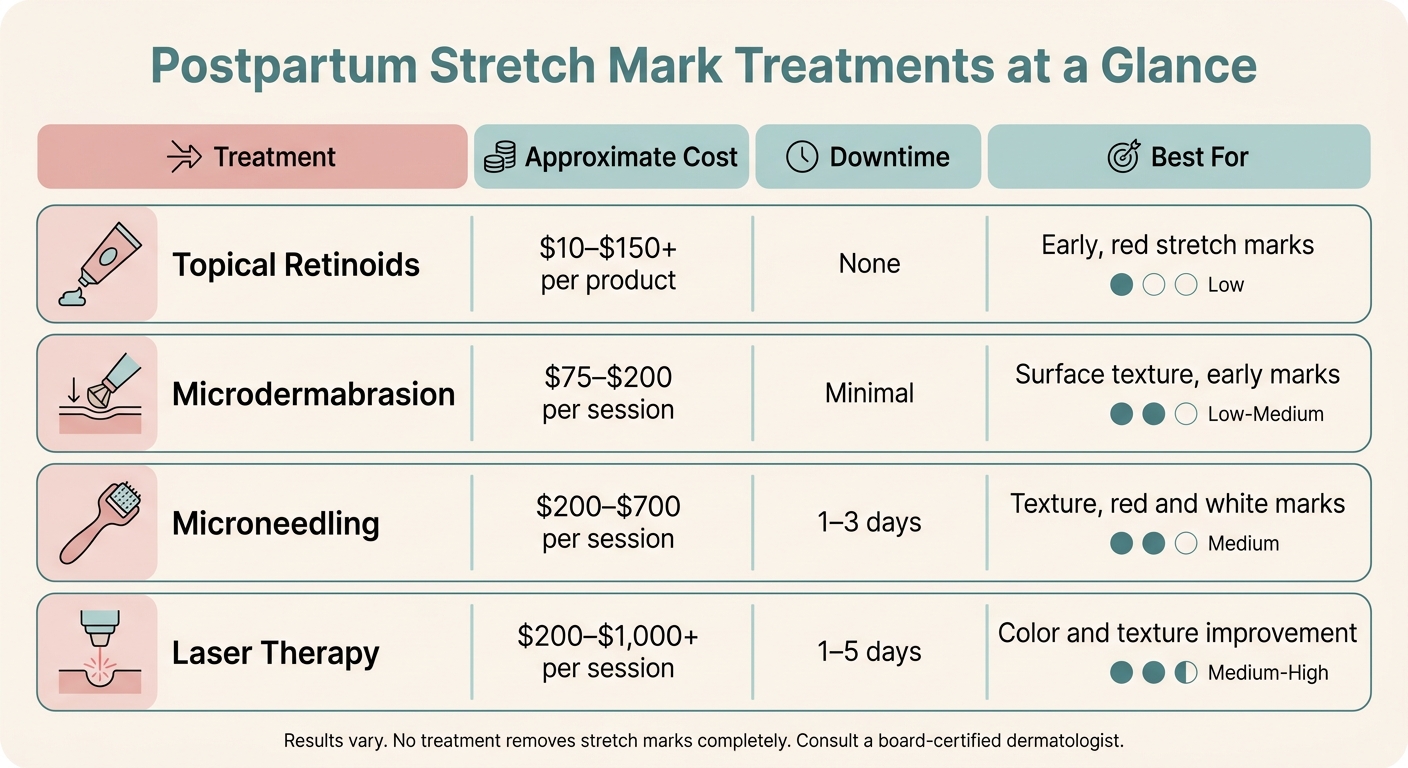
Postpartum Stretch Mark Treatments: Cost, Downtime & Results Compared
After delivery, stretch mark care moves from prevention to treatment. Beyond skin health, following postpartum tips for new parents can help you manage the broader transition to life with a newborn. At that point, you have more options, and the focus shifts to improving both texture and color. A good place to start is with topical products. If you want a bigger change, in-office treatments may help more.
Topical treatments after pregnancy
After delivery, some ingredients that weren't allowed during pregnancy may be back on the table. Retinoids, including retinol and prescription tretinoin, are among the most studied topical treatments for stretch marks. They work by speeding up cell turnover and supporting collagen production in the skin.
If you're breastfeeding, talk with your dermatologist before adding any active ingredients back into your routine.
Dermatology procedures for red and white stretch marks
If you want stronger results, in-office procedures can help with both the color and texture of stretch marks. Common options include:
-
Laser therapy: Pulsed dye lasers tend to work best on red, newer stretch marks because they target blood vessels under the skin. Fractional lasers may help smooth texture on both red and white marks.
-
Microneedling: This treatment creates controlled micro-injuries in the skin to stimulate collagen and improve texture over time.
-
Microdermabrasion: A surface-level exfoliation treatment that may help improve the look of early stretch marks.
Results vary, and most procedures take more than one session. A board-certified dermatologist can help you weigh your choices based on your skin tone, the stage of your stretch marks, and your budget.
Comparing treatment options by cost, downtime, and results
|
Treatment |
Approximate Cost |
Downtime |
Best For |
|---|---|---|---|
|
Topical retinoids |
$10–$150+ per product |
None |
Early, red stretch marks |
|
Microdermabrasion |
$75–$200 per session |
Minimal |
Surface texture, early marks |
|
Microneedling |
$200–$700 per session |
1–3 days |
Texture, red and white marks |
|
Laser therapy |
$200–$1,000+ per session |
1–5 days |
Color and texture improvement |
No single treatment removes stretch marks completely. The goal is gradual improvement in color and texture over time.
Conclusion: realistic expectations and a long-term care plan
After pregnancy, stretch mark care usually moves from comfort to treatment. During pregnancy, the aim is comfort and support, not a promise that stretch marks can be stopped. Moisturizers can help with itching and dry skin, but they won't fully prevent stretch marks. After delivery, it makes sense to talk with a dermatologist about postpartum options that fit your skin and your budget.
The goal is steady care now and targeted treatment later.
Key takeaways for pregnancy and postpartum stretch mark care
Here’s the simplest long-term plan.
Start moisturizing early and follow your healthcare provider’s guidance on weight gain. Eat a nutrient-rich diet. Avoid retinoids and high-dose vitamin A, and check supplements with your clinician. After delivery, discuss postpartum options with a dermatologist if you want to look at next steps. Use daily care during pregnancy and treatment options after delivery.
FAQs
When do pregnancy stretch marks usually start?
Pregnancy stretch marks often begin in the early part of pregnancy, when your skin starts stretching - most often around the breasts and abdomen.
Can moisturizers prevent stretch marks?
Moisturizers can’t fully prevent stretch marks. But they can help ease the itchiness that often shows up as the skin around the breasts and abdomen stretches during pregnancy.
And by keeping the skin hydrated, moisturizers may also help soften the look of any marks that appear later.
When can I treat stretch marks after birth?
You can start treating stretch marks after birth once your skin starts settling back toward its pre-pregnancy state. For many women, that happens a few weeks after delivery.
If you’re not sure what’s safe for your situation, talk with your healthcare professional.