


Your pelvic floor muscles are critical during pregnancy. They support your growing baby, bladder, and other organs, but pregnancy can strain these muscles, leading to issues like urinary leaks, pelvic pain, or organ prolapse. Nearly 50% of pregnant women experience pelvic floor problems, but with proper care, you can minimize discomfort, improve labor outcomes, and recover faster postpartum.
Key Takeaways:
-
Pelvic Floor Basics: These muscles act as a supportive "sling" for your organs. They need both strength and flexibility to function well, especially during pregnancy and childbirth.
-
Common Issues: Urinary incontinence, pelvic pain, and organ prolapse affect many pregnant women, but exercises and good habits can help.
-
Exercises: Kegels strengthen muscles, while relaxation techniques like diaphragmatic breathing and perineal massage prepare for labor.
-
Daily Habits: Proper posture, hydration, and fiber-rich diets reduce strain on your pelvic floor.
-
When to Get Help: If you experience leaks, pain, or pressure, consult a pelvic floor specialist for personalized care.
Addressing pelvic floor health early can make pregnancy, labor, and recovery smoother. Let’s break it down further.
Pelvic Floor Anatomy and Function
What is the Pelvic Floor?
The pelvic floor is a network of 14 muscles, along with ligaments and connective tissues, forming a supportive bowl at the base of your pelvis. These muscles stretch from your pubic bone at the front to your tailbone (coccyx) at the back and span the space between your left and right sitting bones.
The two primary muscle groups are the levator ani and the coccygeus. The levator ani, the larger of the two, is made up of three smaller muscles: the pubococcygeus, puborectalis, and iliococcygeus. The coccygeus is positioned toward the back of the pelvis. Together, these muscles function as a supportive sling for your pelvic organs.
This system works in harmony with your diaphragm, abdominal muscles, and back to stabilize your spine. Dr. Tarek Khalife describes it this way:
The pelvic floor... is the diaphragm of the pelvis. These muscles support the uterus, bladder, large intestine and rectum.
What the Pelvic Floor Does
The pelvic floor muscles perform several key tasks. When contracted, they tighten to help prevent leaks of urine, stool, or gas. When relaxed, they allow for elimination.
During pregnancy, the hormone relaxin softens these tissues, preparing them for the stretching needed during vaginal delivery. The Cleveland Clinic highlights their role:
Your pelvic floor muscles act as a sling that holds your pelvic organs in place.
This "sling" also plays a part in sexual health, aiding in vaginal contractions and enhancing sensation during orgasm. Beyond pregnancy, the pelvic floor is crucial for core stability, working alongside other core muscles to maintain balance and spinal alignment during everyday movements.
Knowing how the pelvic floor is structured and how it functions is key to understanding how to care for it, especially during pregnancy. (A pregnancy care package can also provide comfort during this time.) Up next, we’ll explore how pregnancy further affects these essential muscles.
Best Pregnancy Pelvic Floor Exercises (Easy Delivery + Fast Recovery)
How Pregnancy Affects the Pelvic Floor
Pregnancy brings significant changes to your pelvic floor, driven by hormonal shifts and physical demands. One key player is relaxin, a hormone secreted by the placenta. Relaxin softens the cervix and increases the flexibility of pelvic ligaments to prepare your body for childbirth. Dr. Tarek Khalife, an OB-GYN at Mayo Clinic Health System, explains:
The placenta secretes the hormone relaxin to increase the flexibility of ligaments in the pelvis and soften the cervix. These changes prepare the body for birth. As a result, the connection between the pelvis bones becomes looser, resulting in enhanced flexibility and reduced stability.
While this increased flexibility is essential for delivery, it also means the pelvic floor has to work harder. It now supports not only your growing baby, but also the placenta, increased blood volume, and an expanding uterus - all while its tissues are loosening. As pregnancy progresses, the hiatal area (the opening in the pelvic floor muscles) widens, and organs like the cervix may shift lower into the pelvis.
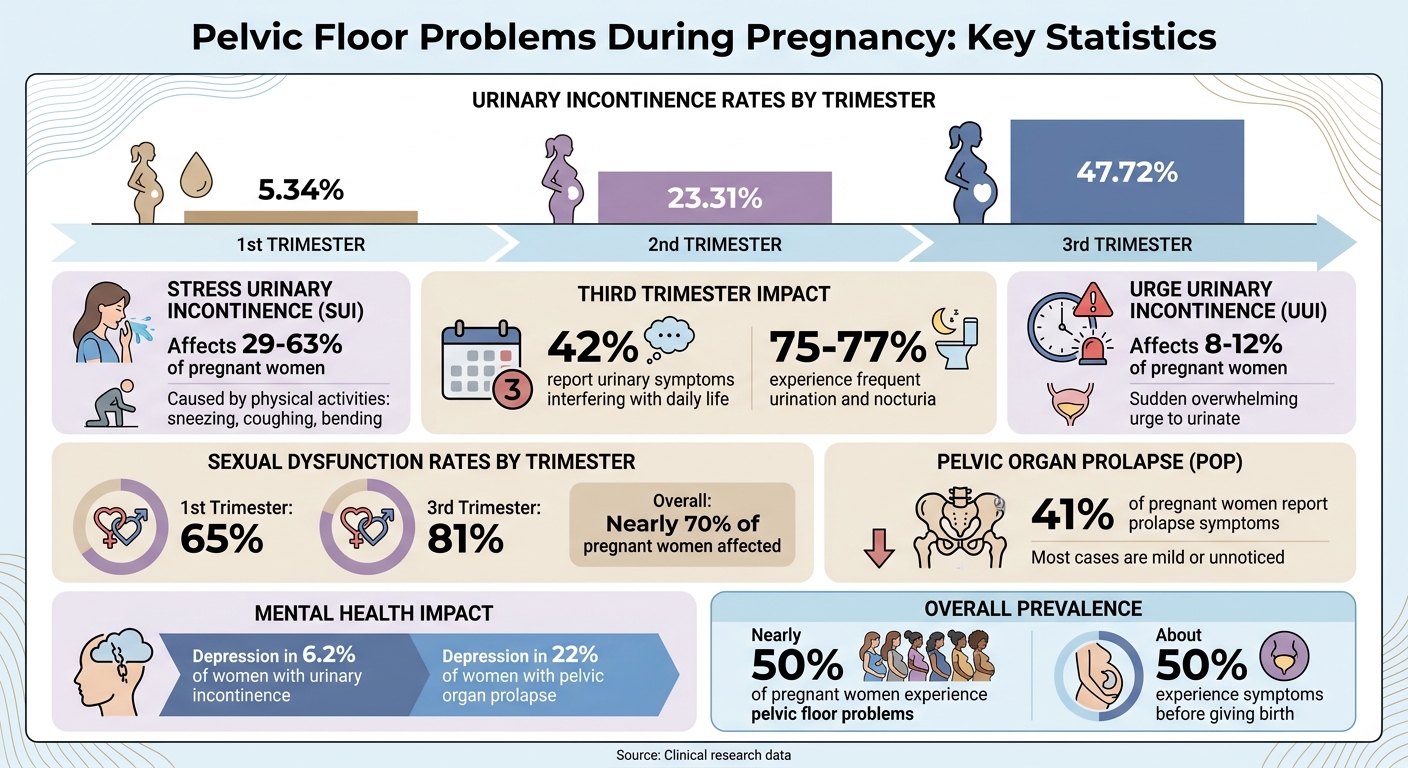
The numbers paint a clear picture of these challenges. Stress urinary incontinence affects 5.34% of women in their first trimester, jumps to 23.31% during the second, and peaks at 47.72% by the third trimester. In fact, about half of all pregnant women experience symptoms of pelvic floor disorders before giving birth.
Hormonal changes during pregnancy also slow digestion, which often leads to constipation in the third trimester. Straining during bowel movements adds even more stress to the already softened pelvic floor muscles. On top of that, between 75% and 77% of pregnant women deal with frequent urination and nocturia, caused by a combination of hormonal and physical pressures.
A higher body mass index (BMI) can further increase the risk of stress urinary incontinence, highlighting the importance of managing weight during pregnancy. Maintaining a healthy weight through balanced eating and regular exercise can help ease the strain on your pelvic floor.
Common Pelvic Floor Problems During Pregnancy
Pelvic Floor Health Statistics During Pregnancy: Incontinence, Pain & Prolapse Rates
Understanding the common pelvic floor issues during pregnancy can help you address them early and manage them more effectively with continuous pregnancy care. These problems generally fall into three categories, each impacting your comfort and daily life in unique ways.
Urinary Leaking and Incontinence
Urinary incontinence is a common issue during pregnancy, with over half of women experiencing it. It primarily includes stress urinary incontinence (SUI) and urge urinary incontinence (UUI). SUI, which affects 29–63% of women, happens when physical activities like sneezing, coughing, or bending put pressure on the bladder, causing leaks. Dr. Lisa C. Hickman and Dr. Katie Propst explain:
During pregnancy, estrogen and progesterone decrease urethral pressure that, together with increased intra-abdominal pressure from the gravid uterus, can cause or worsen stress urinary incontinence (SUI).
UUI, affecting 8–12% of women, involves a sudden, overwhelming urge to urinate due to bladder muscle instability. By the third trimester, nearly 42% of women report urinary symptoms that interfere with their daily lives.
While urinary issues are a significant concern, they are not the only challenges expectant mothers face. Pelvic pain and organ prolapse are also common.
Pelvic Pain and Discomfort
Pelvic pain during pregnancy often results from the added strain on ligaments and muscles, which are already softened by hormonal changes. This extra pressure on the pelvic floor can lead to general discomfort or pain during sexual activity, a condition known as dyspareunia. Sexual dysfunction affects nearly 70% of pregnant women, with rates increasing from 65% in the first trimester to over 81% by the third.
The emotional toll of these issues is also significant. Depression impacts 6.2% of women with urinary incontinence and 22% of those with pelvic organ prolapse, underscoring the mental and emotional challenges that can accompany these physical changes. Finding ways to pamper yourself, such as with a mom-to-be box filled with essentials, can help support your well-being during this time.
In addition to pain, weakened pelvic support structures may lead to prolapse symptoms.
Pelvic Organ Prolapse
Pelvic organ prolapse (POP) happens when pelvic organs like the bladder, uterus, or rectum shift out of their normal position due to weakened support. Hormonal changes and the mechanical pressure from a growing uterus increase the likelihood of this condition. Around 41% of pregnant women report prolapse symptoms, though many cases are mild or go unnoticed.
Symptoms may include a feeling of heaviness or pressure in the pelvis, a bulge in the vaginal area, or difficulty fully emptying the bladder. While many cases improve after childbirth, effective treatments are available for persistent symptoms.
Pelvic Floor Exercises for Pregnancy
During pregnancy, your pelvic floor goes through a lot. These muscles need to stay strong to support your body, but they also need to learn to relax to prepare for labor. Striking this balance can reduce discomfort and help with delivery. Dr. Jackie Joy, a pelvic floor physical therapist, puts it plainly:
"It's actually MUCH more important for your pelvic floor to be able to let go and RELAX (aka, get the hell out of the way) so that your baby can come through easily."
This mix of strength and relaxation is key. Specialized pelvic health programs have shown impressive results, with participants reporting a 67% drop in pelvic pain and a 54% decrease in urinary incontinence in just 12 weeks. Let’s dive into some of these helpful techniques, starting with Kegels.
Kegel Exercises
Kegels target the muscles supporting your bladder, uterus, and bowel. To locate these muscles, imagine stopping the flow of urine or holding in gas. Once identified, picture gently lifting a marble upward as you contract.
Here’s how to do them properly:
-
Squeeze and hold the contraction for 3 seconds, then relax completely for another 3 seconds.
-
Sit on a small cushion to check your form - you should feel a slight lift without using your abdomen, thighs, or buttocks.
-
Focus solely on your pelvic floor muscles, keeping your breathing steady and natural.
Aim for three sets of 10 to 15 repetitions daily. Practice in different positions - lying down, sitting, or standing - to build strength. With consistent effort, you may notice better bladder control within 3 to 6 weeks.
While Kegels are great for strength, your pelvic floor also needs the ability to relax, especially as labor approaches.
Relaxation and Stretching
Relaxing your pelvic floor is just as crucial as strengthening it, especially for childbirth. During labor, these muscles must stretch two to three times their usual range. Dr. Allison Oswald, a physical therapist, explains:
"Kegels are not for every pregnant woman... if a woman has been assessed with a truly weak pelvic floor, then Kegels are one piece of the puzzle. But as a general approach, it is more important to be able to fully contract and relax."
Start with diaphragmatic breathing: inhale deeply into your belly, allowing your pelvic floor to naturally expand and descend. On the exhale, gently engage your abdominal muscles to lift the pelvic floor.
You can also try Reverse Kegels, which involve consciously relaxing and lengthening the pelvic floor muscles. Yoga poses like child’s pose or happy baby are excellent for releasing tension. During the first and second trimesters, focus more on strengthening. By the third trimester, shift your attention to relaxation and hip-opening exercises to prepare for delivery.
Daily practice can make these exercises even more effective.
Adding Pelvic Floor Work to Your Daily Routine
You don’t need to carve out extra time for pelvic floor exercises - they can easily fit into your day. For example, perform a Kegel while squatting or quietly contract your pelvic floor muscles while sitting.
Kegel squats are a great option: as you lower into a squat, perform a Kegel, hold it at the bottom, and relax as you return to standing. This movement trains your pelvic floor to work alongside larger muscle groups. Dr. Renee Bullis suggests:
"Include a Kegel with the squat to cue your pelvic floor to work with other muscles."
Find creative ways to incorporate exercises into your routine - try sets while brushing your teeth or sitting at a red light. You can even practice seated Kegels discreetly during work or while watching TV. Just avoid doing Kegels while urinating, as this can prevent your bladder from emptying fully and increase your risk of urinary tract infections.
Preparing Your Pelvic Floor for Labor and Delivery
Getting your pelvic floor ready for birth involves a balance of strength and relaxation. This preparation can improve how you push during labor and reduce the risk of complications like hemorrhoids, prolapse, and perineal tearing. Starting early helps your muscles build the memory they need to lengthen effectively during labor. A customized physical therapy plan can make this process even more effective.
Pelvic Floor Physical Therapy
A pelvic floor physical therapist can create a personalized plan to prepare your body for childbirth. They’ll help you identify habits that might hinder delivery, like constant clenching or excessive abdominal tension, and guide you toward healthier movement patterns. They also teach proper pushing techniques and diaphragmatic breathing, which can make labor more efficient. If you’re dealing with issues like urinary leakage, pelvic pressure, or pain in areas such as the pubic bone, tailbone, or lower back, seeing a specialist becomes even more important. The second trimester is a great time to focus on pelvic floor health, as morning sickness often eases up by then. Pairing physical therapy with targeted perineal massage can further prepare your body for delivery.
Perineal Massage
Perineal massage is a way to help the tissue between the vaginal opening and anus stretch, reducing the likelihood of tearing during childbirth. This is particularly important because 53% to 79% of people experience some degree of tearing during vaginal delivery, ranging from minor first-degree tears to more severe fourth-degree tears that extend to the rectum. Regular perineal massage has been shown to lower the risk of serious lacerations. Dr. Salena Zanotti, an Ob/Gyn, explains:
"The perineum can be very rigid and the muscles can be tight, particularly if you've never delivered a baby vaginally before. So, in theory, the idea is that massaging the area can help stretch the muscles and skin and reduce your chances of tearing."
To get started, aim to begin perineal massage 4–6 weeks before your due date, doing it 3–4 times a week for at least 5 minutes. First, wash your hands, trim your nails, and use a lubricant like coconut oil, olive oil, or a water-based jelly. Lie on your back with your legs apart and knees bent. Insert one or both thumbs about 1 to 1.5 inches into your vagina. Gently press downward toward your anus until you feel a mild stretch, holding it for 1 to 2 minutes. Then, slowly move your thumbs in a U-shaped motion to further stretch the tissue.
Daily Habits for Pelvic Floor Health
In addition to specific exercises, your everyday habits play a big role in maintaining pelvic floor health. These small, consistent actions not only support your pelvic floor during pregnancy but can also make postpartum recovery smoother. By reducing strain and preventing complications, these habits help protect your pelvic floor for the long run.
Posture and Body Mechanics
The way you stand, sit, and move can directly influence the amount of pressure placed on your pelvic floor. Aim to stand tall with your chin slightly tucked, shoulders relaxed, and knees slightly bent. Engage your core as you stand, and try not to stay in one position for too long. If you're standing for extended periods, place one foot on a small stool and switch feet every few minutes to ease the strain.
When sitting, keep your back straight, shoulders relaxed, and your hips and knees at a 90° angle. Rest your feet flat on the floor or on a footstool, and make sure your buttocks are positioned against the back of the chair for proper support. Avoid sitting in the same position for over 30 minutes. When getting up, slide forward to the edge of your seat and straighten your legs to rise, instead of bending forward at the waist.
For lifting, try to avoid carrying anything heavier than 20 pounds. Use a wide stance, bend at your knees and hips, and engage your core and pelvic floor muscles before lifting. These adjustments can help reduce unnecessary stress on your pelvic floor.
Proper movement is critical, but managing your digestive health is just as important.
Bladder and Bowel Health
Much like posture supports movement, mindful eating and drinking habits can support pelvic floor health. Staying hydrated is key - drink 8–10 glasses of water daily to prevent dehydration, which can help reduce the risk of urinary tract infections. Limit caffeine and alcohol, as they can irritate the bladder and exacerbate leakage.
Constipation can put added pressure on your bladder and pelvic floor, so keeping your digestive system running smoothly is essential. A fiber-rich diet, plenty of water, and regular physical activity can help prevent straining during bowel movements, which can weaken pelvic floor muscles and nerves over time.
Breathing and Relaxation Techniques
Diaphragmatic breathing is an essential practice for pelvic floor health. This type of deep breathing allows your diaphragm and pelvic floor to work together naturally. When you inhale, both the diaphragm and pelvic floor drop and lengthen; when you exhale, they rise and contract. Dr. Allison Oswald, a Doctor of Physical Therapy, emphasizes its importance:
"Diaphragmatic breathing is key to good pelvic floor health. This is when you fully breathe into the rib cage and allow the diaphragm and the pelvic floor muscles to drop down, or lengthen."
To incorporate this into your routine, try deep belly breathing. Imagine your abdomen inflating like a balloon as you inhale, sending your breath downward to your sit bones, outward into your ribcage, and backward along your spine. For activities like lifting, coughing, or sneezing, exhale as if blowing through a straw and gently engage your pelvic floor with a light Kegel contraction before the motion to help prevent leakage.
While strengthening your pelvic floor is important, learning to relax and lengthen these muscles is just as crucial. Letting go of unnecessary tension throughout the day helps prepare your body for the flexibility and adaptability needed during labor and other physical demands.
When to See a Pelvic Floor Specialist
Although daily habits and exercises can support your pelvic floor health, certain symptoms indicate it’s time to seek professional help. Pelvic floor physical therapy isn’t just about addressing problems - it’s also a proactive way to prepare for labor and refine your exercise techniques.
You should consider seeing a specialist if you experience involuntary urine leakage during activities like coughing, sneezing, laughing, or lifting. Struggles with bowel or gas control are also signs to watch for. Persistent pain in areas such as the pubic region, sacroiliac joints, or lower back that interferes with movement is another concern. Additionally, feelings of pelvic pressure or heaviness - especially if it feels like something is bulging or falling out - should be assessed by a professional.
Timing matters when it comes to consulting a specialist. Victoria Mallow, PT, DPT, MA, emphasizes the importance of early evaluation:
Around 12–16 weeks of pregnancy is a great time to establish a baseline for how your pelvic floor is functioning.
This early check-up can help identify potential issues before they escalate. If scheduling is limited, aim to attend sessions starting at 34 weeks. During this period, you’ll learn essential skills like pushing techniques, breathing strategies, and ways to prepare the perineal tissue. (For more ways to support your journey, check out our pregnancy gift guide for self-care essentials.) These methods can help reduce the second stage of labor and lower the risk of tearing.
Specialists also provide tailored muscle training to counteract the effects of relaxin, a pregnancy hormone that softens tissues and can make it harder for muscles to support pelvic organs. This is especially important since one in three women experience urinary incontinence after childbirth, and delivering a baby over 8.8 pounds increases the risk of pelvic floor dysfunction.
Beyond pregnancy, professional guidance ensures you’re performing exercises correctly, which is vital for effective postpartum recovery. If you have specific risk factors - such as a history of multiple births or a prolonged second stage of labor lasting over an hour - a specialist can create a personalized recovery plan. For help finding a local expert, you can reach out to resources like the National Continence Helpline.
Conclusion
During pregnancy, your pelvic floor takes on a heavy workload - supporting your growing baby, managing increased blood flow, and preparing your body for labor. It's no surprise that many women face pelvic floor challenges during this time. Focusing on pelvic floor health now can make a big difference in your birth experience and postpartum recovery.
Striking a balance is key. Your pelvic floor needs to be strong enough to support your body throughout pregnancy but also flexible enough to relax during delivery. As pelvic floor physical therapist Jackie Roelofs explains:
If you don't know how to relax your pelvic floor muscles, you may end up squeezing them at the very time they need to be opening up so your baby can get out!
To achieve this balance, combine functional exercises like squats and lunges with relaxation practices such as deep breathing and gentle stretches.
Pay attention to warning signs like urinary leaks when sneezing, feelings of pelvic heaviness, or ongoing pain. These could indicate areas that need attention. Interestingly, about 40% of people don’t perform Kegel exercises correctly on their first try, which is why working with a pelvic floor physical therapist can be incredibly helpful. They can create a tailored plan to meet your needs and prepare you for the physical challenges of motherhood, from labor to lifting your little one.
Small, consistent habits make a big impact. Pregnancy offers a unique chance to build awareness of your body and boost your confidence. Whether you’re surviving the first trimester or nearing delivery, focusing on posture, mindful breathing, and listening to your body can lead to lasting benefits. Taking care of yourself now lays the foundation for long-term health and well-being.
FAQs
How do I know if I’m doing Kegels correctly?
To ensure you're performing Kegels correctly, focus on targeting the right muscles. These are the same muscles you engage when stopping the flow of urine midstream. Contract these muscles for about 3–5 seconds, then relax for an equal amount of time. Be careful not to involve your abdominal, thigh, or buttock muscles during the exercise. If you're pregnant or postpartum, you should notice a gentle lifting sensation in the pelvic area. If you're uncertain, it's always a good idea to consult a healthcare professional for guidance.
When should I focus more on relaxing my pelvic floor than strengthening it?
If you're dealing with pelvic pain, discomfort, or signs of tension during pregnancy, it's important to focus on relaxing your pelvic floor. While strengthening exercises are beneficial, combining them with relaxation techniques can help avoid over-tightening, which might contribute to discomfort. If your pelvic muscles feel overly tight or you find it hard to relax them, prioritize relaxation techniques. Always check with a healthcare provider or a pelvic floor therapist to ensure your exercise routine is tailored to your specific needs.
What symptoms mean I should see a pelvic floor physical therapist during pregnancy?
If you're dealing with issues like incontinence, pain during sex, a feeling of pelvic pressure or heaviness, lower back or pelvic pain, or trouble controlling your bladder or bowels, it might be a good idea to consult a pelvic floor physical therapist. These symptoms could point to pelvic floor dysfunction, which often involves muscles that are either too weak or too tense. A therapist can work with you to address these concerns, helping to improve your overall well-being, especially during pregnancy.
Sending hugs,
rumbly 💜