

Pregnancy changes your skin in unexpected ways - hormonal shifts can trigger acne, dryness, or dark patches. But some skincare ingredients can harm your baby, making it essential to choose safe alternatives. Here's what you need to know:
-
Avoid These Ingredients: Retinoids, hydroquinone, chemical sunscreen filters (like oxybenzone), high-dose salicylic acid, parabens, phthalates, and certain essential oils.
-
Safe Ingredients to Use: Hyaluronic acid, niacinamide, vitamin C, azelaic acid, ceramides, and mineral sunscreens with zinc or titanium dioxide.
-
Key Steps:
-
Use a gentle cleanser.
-
Hydrate with pregnancy-safe serums.
-
Treat specific concerns with safe actives.
-
Moisturize to restore your skin barrier.
-
Apply mineral sunscreen daily.
-
Focus on simplicity and consistency. Patch-test new products, limit exfoliation, and adjust your routine as your skin changes through each trimester. For an easier approach, curated skincare boxes like Rumbly offer pregnancy-safe solutions tailored to your needs.
Pregnancy-Safe Skincare Routine | What to Use & Avoid | Dr. Sheila
Ingredients to Avoid During Pregnancy
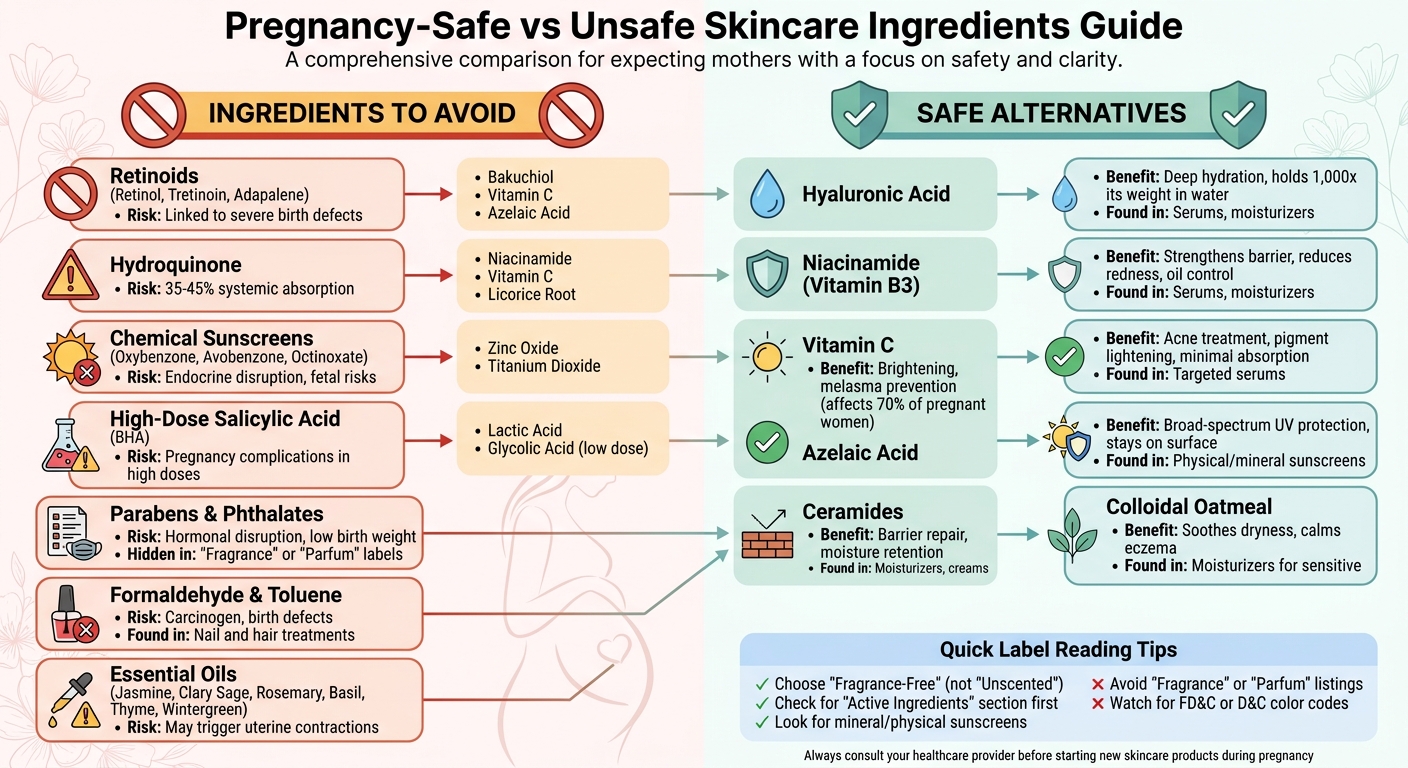
Pregnancy-Safe vs Unsafe Skincare Ingredients Guide
It's crucial to know which ingredients to steer clear of during pregnancy and how to identify them on product labels. This knowledge helps ensure the safety of both you and your baby.
Harmful Ingredients in Skincare Products
Retinoids are one of the top ingredients to avoid. These vitamin A derivatives - like retinol, tretinoin, and adapalene - are linked to serious birth defects. Even though topical retinoids are absorbed less than oral ones, experts recommend avoiding them entirely during pregnancy and breastfeeding as a precaution.
Hydroquinone, often used in skin-lightening products, is another ingredient to skip. Its high absorption rate - about 35–45% of the applied product - leads to significant exposure, and there’s a lack of safety data for its use during pregnancy.
Chemical sunscreen filters such as oxybenzone and avobenzone can penetrate the skin and enter the bloodstream, potentially acting as endocrine disruptors. Professor Caitriona Ryan, Consultant Dermatologist, highlights the risks:
"Analysis of human exposure levels to oxybenzone... demonstrates that enough chemicals can cross into the mother's blood making it available to the foetus at high enough levels that can indeed inhibit migration of neural crest cells during critical embryonic development".
Salicylic acid is generally safe in low concentrations (under 2% in wash-off products). However, high concentrations, like those in chemical peels, can be absorbed systemically and may lead to complications during pregnancy.
Parabens and phthalates are associated with hormonal disruptions, low birth weight, and impaired fetal growth. Phthalates are often hidden under terms like "fragrance" or "parfum", making it essential to avoid products with these vague labels.
Formaldehyde and toluene, commonly found in nail and hair treatments, pose additional risks. Formaldehyde is a known carcinogen and respiratory irritant, while toluene has been linked to birth defects.
Certain essential oils can also be problematic. Oils like jasmine, clary sage, rosemary, basil, thyme, and wintergreen may trigger uterine contractions or affect blood pressure. Use these with caution during pregnancy.
Understanding these risks is only part of the equation. Learning how to read product labels effectively ensures you can avoid these harmful ingredients.
How to Read Product Labels
Start by reviewing the "Active Ingredients" section on over-the-counter products. Here, you’ll spot items like oxybenzone or high-strength salicylic acid. Then, check the full ingredient list on the back of the package. Be wary of marketing terms like "natural" or "organic", as they aren’t strictly regulated.
Red flags to watch for include:
-
Any form of retinoid (e.g., retinol, tretinoin, adapalene, or retinyl palmitate)
-
Hydroquinone in brightening products
-
Chemical sunscreen filters like oxybenzone, octinoxate, or avobenzone
-
Labels listing "fragrance" or "parfum", which may hide phthalates
Instead, choose products labeled "fragrance-free" rather than "unscented", as the latter can still include masking fragrances.
For sunscreens, opt for "mineral" or "physical" formulations with zinc oxide or titanium dioxide as active ingredients. These sit on the skin's surface rather than being absorbed into the bloodstream. If essential oils like rosemary or clary sage are listed near the top of the ingredient list, they may be present in unsafe concentrations. Additionally, synthetic dyes are often labeled as "FD&C" or "D&C" followed by a color and number, such as FD&C Red No. 40.
|
Ingredient to Avoid |
Why It's Unsafe |
Safe Alternative |
|---|---|---|
|
Retinoids |
Linked to severe birth defects |
Bakuchiol, Vitamin C, Azelaic Acid |
|
Hydroquinone |
High absorption (35–45% systemic exposure) |
Niacinamide, Vitamin C, Licorice Root |
|
Chemical SPF |
Endocrine disruption; fetal risks |
Zinc Oxide or Titanium Dioxide |
|
High-Dose BHA |
May lead to pregnancy complications |
Lactic Acid or Glycolic Acid (low dose) |
|
Benzoyl Peroxide |
Can cause skin irritation/sensitivity |
Azelaic Acid |
Safe Ingredients for Pregnancy
Now that you’re familiar with what to avoid, let’s shift focus to ingredients that can help maintain healthy skin while keeping you and your baby safe. These options address common pregnancy-related skin concerns like dryness, melasma, and hormonal acne, all while prioritizing safety.
Pregnancy-Safe Ingredients and Their Benefits
With your new label-reading skills, you can confidently choose these skin-friendly ingredients for your routine.
Hyaluronic Acid is a top-notch hydrator capable of holding up to 1,000 times its weight in water. This molecule naturally occurs in the skin and works by binding water to the epidermis, offering deep hydration and a plumping effect - all without systemic absorption. Look for it in serums and moisturizers.
Niacinamide (Vitamin B3) is a multitasker that strengthens the skin barrier, reduces redness, and regulates oil production. This makes it especially helpful during pregnancy, when hormonal shifts can lead to increased oiliness and sensitivity.
Vitamin C is a safe and effective brightening agent. It acts as an antioxidant and inhibits tyrosinase, the enzyme responsible for melanin production, making it an excellent choice for managing melasma - a condition that affects up to 70% of pregnant women. Studies confirm that topical vitamin C is safe for use during pregnancy.
Azelaic Acid is often referred to as a "gentle powerhouse." It tackles both hormonal acne and hyperpigmentation thanks to its antimicrobial and anti-inflammatory properties. With minimal systemic absorption, it’s a safe and effective alternative to retinoids.
Mineral Sunscreens with zinc oxide or titanium dioxide are essential for protecting your skin, particularly against worsening melasma. These physical filters sit on the skin’s surface to block UV rays without entering the bloodstream.
Ceramides are essential lipids that help restore and maintain the skin barrier, which can be weakened by hormonal changes during pregnancy.
Colloidal Oatmeal provides soothing relief for dryness and inflammation. It reduces water loss and calms eczema-prone or severely dry skin. Additionally, benzoyl peroxide can be used safely in low concentrations (2.5–5%) for targeted acne treatment.
Rhiannon, an askINKEY advisor at The INKEY List, shares:
"The pregnancy-safe ingredients we've discussed - niacinamide, azelaic acid, vitamin C, hyaluronic acid, and ceramides - often provide superior long-term results compared to harsher alternatives."
Safe vs. Unsafe Ingredients Comparison
Here’s a quick look at safe and unsafe ingredients for pregnancy:
|
Ingredient Name |
Safety Status |
Primary Benefits |
Common Sources |
|---|---|---|---|
|
Hyaluronic Acid |
Safe |
Deep hydration, plumping |
Hydrating serums, toners |
|
Niacinamide |
Safe |
Oil control, redness reduction |
Serums, moisturizers |
|
Vitamin C |
Safe |
Brightening, melasma prevention |
Brightening serums |
|
Azelaic Acid |
Safe |
Acne treatment, pigment lightening |
Targeted serums |
|
Ceramides |
Safe |
Barrier repair, moisture retention |
Moisturizers, creams |
|
Zinc Oxide |
Safe |
Broad-spectrum UV protection |
Mineral sunscreens |
|
Retinoids |
Avoid |
Risk to fetal development |
Retinol, Tretinoin |
|
Hydroquinone |
Avoid |
High absorption rates |
Lightening creams |
|
Oxybenzone |
Avoid |
Potential endocrine-disrupting effects |
Chemical sunscreens |
When shopping, prioritize products labeled "fragrance-free" instead of "unscented", as the latter may still contain masking chemicals or phthalates. You can also use apps like SafeMom or MamaSkin to scan product labels and check for safety using extensive ingredient databases.
With this knowledge and these safe ingredients, you’re ready to create a skincare routine that supports your skin throughout pregnancy. For more essentials, check out our ultimate pregnancy gift guide.
Building Your Pregnancy Skincare Routine
Now that you know which ingredients are safe, it's time to turn that knowledge into action. Keeping things simple is the best approach when creating a pregnancy-safe skincare routine. As Sarah Villafranco, MD, CEO of Osmia Skincare, explains:
"Pregnancy is not the time to experiment with a complicated routine full of new active ingredients. Your skin barrier is already dealing with major hormonal shifts, so consistency and simplicity are your allies."
Focus on three main goals: protecting your skin from UV damage, maintaining and restoring your skin barrier, and calming inflammation. Before introducing any new product, always do a patch test on your inner forearm for 48–72 hours. This way, you can ensure your skin reacts well while keeping your routine safe and effective.
Step 1: Cleanse Your Skin
Start with a gentle cleanser that’s sulfate-free and fragrance-free to remove dirt and impurities without stripping your skin’s natural oils. Avoid harsh ingredients like Sodium Lauryl Sulfate (SLS), which can irritate skin made more sensitive by hormonal changes. Look for soothing ingredients like aloe vera or chamomile, and wash with lukewarm water - hot water can worsen dryness and itching, which are common during pregnancy. Cleanse once in the evening, or twice daily if your skin feels oily.
Step 2: Add Hydration
After cleansing, apply a hydrating serum while your skin is still slightly damp. This step is critical because pregnancy-related hormonal changes can weaken your skin’s outer layer, leading to increased water loss and sensitivity. Hyaluronic acid is a great choice since it holds up to 1,000 times its weight in water. Pair it with niacinamide to strengthen your skin barrier and help regulate oil production, which often spikes during pregnancy. This step directly supports the goal of barrier repair.
Step 3: Apply Targeted Treatments
If you’re dealing with specific skin concerns like melasma or hormonal acne, now is the time to use targeted treatments. Vitamin C serums (5–15% concentration) can help brighten your skin and reduce pigmentation, while azelaic acid works well for both acne and hyperpigmentation. For breakouts, low-concentration benzoyl peroxide (2.5–5%) is a safe spot treatment option. Stick to one active ingredient at a time to avoid overwhelming your skin.
Step 4: Moisturize
Seal in hydration with a moisturizer tailored to your skin type. Look for ingredients like ceramides, glycerin, squalane, or colloidal oatmeal to restore your skin barrier and prevent dryness. If your skin is oily, go for a lightweight gel-based moisturizer with hyaluronic acid. For dry or sensitive skin, choose a richer cream with ceramides and colloidal oatmeal for soothing relief, especially in eczema-prone areas. Make this a daily habit to keep your skin healthy and comfortable.
Step 5: Protect from Sun Damage
Finish your morning routine with a broad-spectrum mineral sunscreen (SPF 30–50) containing zinc oxide or titanium dioxide. These mineral sunscreens protect you from UV rays without being absorbed into your body. Sunscreen is especially important to prevent melasma, which can worsen with sun exposure. For extra protection, wear wide-brimmed hats and seek shade when you’re outside.
Morning and Evening Routine Examples
Here's how to put together a simple morning and evening skincare routine that's safe for pregnancy. The morning routine prioritizes protection, while the evening routine focuses on repair and treatment.
Morning Routine
Start your day with a gentle cleanser - look for one with goat milk, oat, or cream-based ingredients to clear away overnight buildup without drying your skin. If your skin feels tight, try applying a hyaluronic acid serum or a hydrating toner to damp skin for an added moisture boost. Next, choose a moisturizer that suits your skin type: a lightweight gel-cream with niacinamide works well for oily skin, while a richer cream with ceramides or glycerin is ideal for dryness. Finish with a broad-spectrum mineral sunscreen (SPF 30–50) containing zinc oxide or titanium dioxide to shield your skin from harmful UV rays. For an optional step, you can add a Vitamin C serum (5–15%) to brighten your skin and provide antioxidant benefits.
Evening Routine
In the evening, cleanse your skin again to remove sunscreen, dirt, and pollutants from the day. Afterward, use a hydrating toner to help restore your skin's barrier. This is the time to apply safe, targeted treatments. For instance, azelaic acid (15–20%) can address pigmentation, while benzoyl peroxide (2.5–5%) is effective for spot-treating acne. Follow up with a richer moisturizer containing ceramides, squalane, or fatty acids to support your skin’s overnight repair. If your skin is particularly dry, consider adding a calming facial oil like squalane or meadowfoam seed oil for an extra layer of hydration.
Morning vs. Evening Routine Comparison
The table below highlights the main steps and differences between the morning and evening routines:
|
Step |
Product Type |
Key Ingredient(s) |
Purpose |
|---|---|---|---|
|
Morning 1 |
Gentle Cleanser |
Goat milk, oat, or cream-based |
Cleanse without stripping natural oils |
|
Morning 2 |
Hydration (Optional) |
Hyaluronic acid |
Relieve tightness and boost hydration |
|
Morning 3 |
Antioxidant Serum |
Vitamin C (5–15%) |
Brighten skin and provide antioxidant support |
|
Morning 4 |
Moisturizer |
Ceramides, glycerin, niacinamide |
Restore barrier and regulate oil production |
|
Morning 5 |
Sunscreen |
Zinc oxide, titanium dioxide |
Protect against UV damage and melasma |
|
Evening 1 |
Gentle Cleanser |
Same as morning |
Remove sunscreen, dirt, and pollutants |
|
Evening 2 |
Hydrating Toner |
Hyaluronic acid |
Replenish and revitalize the skin barrier |
|
Evening 3 |
Targeted Treatment |
Azelaic acid, benzoyl peroxide |
Safely treat acne or hyperpigmentation |
|
Evening 4 |
Rich Moisturizer |
Ceramides, squalane, fatty acids |
Deep hydration and overnight repair |
|
Evening 5 |
Calming Oil (Optional) |
Squalane, meadowfoam seed oil |
Extra nourishment for very dry skin |
Weekly Treatments and Trimester Changes
Taking care of your skin during pregnancy isn't just about daily habits - it also involves weekly treatments and adjusting your routine as your body changes through each trimester.
Weekly Exfoliation
A gentle exfoliation once a week can help remove dead skin cells and leave your skin feeling refreshed. Physical exfoliation with a soft washcloth, sugar scrub, or oatmeal-based product is a great way to achieve smoother skin without worrying about systemic absorption. For a deeper cleanse, low-concentration chemical exfoliants like glycolic acid (around 4%) or lactic acid can help unclog pores and manage acne or pigmentation. If you’re looking for something even gentler, try enzymatic exfoliants made from papaya, pineapple, or pumpkin. These work by breaking down the bonds between dead cells - no scrubbing required.
"I would not exfoliate more than once every two weeks. Treat your skin in the most gentle way you can, because your skin responds to things differently when pregnant, and rebounds much more slowly if you do over-do it." - Dr. Kavita Mariwalla, Dermatologist, Mariwalla Dermatology
Because pregnancy makes your skin thinner and slower to recover, it’s best to limit exfoliation to once a week. After exfoliating, always apply a moisturizer that supports your skin’s barrier, and use mineral sunscreen the next morning. This is especially important to protect against photosensitivity, which can worsen melasma.
Adjusting Your Routine by Trimester
Your skin’s needs change as your pregnancy progresses, so it’s important to tweak your routine to address the specific challenges of each trimester.
-
First trimester: Hormonal acne is common during this time. Swap out retinoids for pregnancy-safe alternatives like azelaic acid or low-concentration benzoyl peroxide (under 5%) to manage breakouts.
-
Second and third trimesters: Focus on keeping your skin hydrated and maintaining elasticity. Use ingredients like ceramides, hyaluronic acid, and natural emollients. After showering, apply rich moisturizers such as shea butter, cocoa butter, or natural oils to damp skin. This helps lock in moisture and ease any itching.
As pregnancy hormones rise, so does the risk of melasma, often referred to as the "mask of pregnancy." Daily use of mineral sunscreen is essential throughout all trimesters to help prevent this.
Pregnancy can also weaken your skin’s outer barrier, making it more reactive. If your skin becomes more sensitive or starts to sting, simplify your routine. Stick to fragrance-free products with barrier-repairing ingredients like ceramides, hyaluronic acid, and colloidal oatmeal, especially during the later months. This gentle approach will help keep your skin calm and nourished.
Rumbly Self-Care Boxes for Pregnancy
Rumbly Boxes for Skincare Needs
Pregnancy skincare can feel like a maze, but Rumbly's curated self-care boxes make it easier by delivering pre-selected, safe products directly to your door. These boxes are designed to match your skincare needs during each trimester, offering thoughtful, pregnancy-safe solutions.
Take the Modern Mom-to-Be Box as an example - it’s priced at $78.00 but includes over $180 worth of skincare and wellness essentials. Inside, you’ll find 5–7 premium products, all sourced from vegan, women-owned, and all-natural brands. This takes the guesswork out of finding products that are both safe and effective.
Rumbly also offers trimester-specific boxes tailored to the unique changes your skin experiences. The second trimester box, for instance, includes organic belly oil to help maintain skin elasticity. By the third trimester, you’ll find magnesium oil to ease leg cramps, along with comfort items to prepare for labor. These boxes are customized to your due date, ensuring the right products arrive just when you need them.
How Rumbly Supports Your Self-Care
Rumbly’s approach to self-care blends practical pregnancy essentials with indulgent beauty and lifestyle items. This "50/50" philosophy is particularly meaningful, as studies show that 83% of women feel overlooked during pregnancy. Rumbly aims to change that by focusing on moms-to-be with products like fragrance-free face washes, cleansing mists packed with antioxidants, bath teas, and hydrating serums.
"While everyone else is laser focused on your baby, Rumbly is laser focused on YOU." - Rumbly
You can find Rumbly boxes on rumbly.co and amazon.com, with free shipping for orders over $50. The subscription service is designed with flexibility in mind - you can adjust, pause, or cancel anytime without penalties. Whether you’re starting your first pregnancy skincare routine or fine-tuning it for a specific trimester, Rumbly offers a hassle-free way to access safe and effective products.
Adding these curated boxes to your routine not only simplifies skincare but also provides a much-needed dose of self-care during your pregnancy journey.
Final Thoughts..
Creating a pregnancy-safe skincare routine doesn’t have to be complicated. The key is sticking to the basics: gentle cleansing, hydration, safe, targeted treatments, moisturizing, and daily mineral sun protection. This straightforward approach works with your body’s hormonal changes, helping to protect both you and your baby from questionable ingredients while addressing common pregnancy-related skin concerns like sensitivity and melasma.
"Pregnancy is not the time to experiment with a complicated routine full of new active ingredients. Your skin barrier is already dealing with major hormonal shifts, so consistency and simplicity are your allies." - Sarah Villafranco, MD, CEO, Osmia Skincare
As your skin changes through each trimester, adjust your routine accordingly. Pay attention to how your skin reacts, patch test new products for 48–72 hours, and scale back if irritation occurs.
Beyond skincare, consider adding self-care elements to your routine. Turning your regimen into a calming ritual not only supports your skin but also reduces stress. Studies show that rituals can lower cortisol levels, benefiting both you and your baby. For a hassle-free way to keep your routine pregnancy-safe, curated boxes like those from Rumbly deliver natural, safe products right when you need them. It’s an easy way to take the guesswork out of skincare during this unique time.
Your pregnancy journey is a time for care and calm. By choosing natural, fragrance-free products and keeping your routine consistent, you can nurture your skin while embracing this transformative phase.
FAQs
What should I do if I used retinol before I knew I was pregnant?
If you used retinol before realizing you were pregnant, it's important to reach out to your healthcare provider or OB-GYN as soon as possible. Retinoids can potentially impact fetal development, so getting professional advice is key. Your doctor might suggest discontinuing retinol and opting for pregnancy-safe alternatives like hyaluronic acid or natural botanicalsto care for your skin safely during this time.
How can I tell if a product’s “fragrance” contains phthalates?
Phthalates often lurk behind the vague term “fragrance” on product labels. This is because manufacturers aren’t obligated to disclose every ingredient in synthetic fragrances. To reduce your exposure, choose products labeled as fragrance-free or those that clearly list natural ingredients. Additionally, performing a patch test can help pinpoint any potential irritants before regular use.
Which pregnancy-safe actives are best for melasma and acne?
Pregnancy-safe ingredients that may help with melasma and acne include vitamin C, azelaic acid, niacinamide, and turmeric. These options are widely regarded as safe for expectant mothers and can promote brighter, clearer skin while targeting these common issues.