


Breastfeeding vs. Pumping: Finding Balance
Breastfeeding and pumping each offer unique advantages and challenges, and many parents find that combining the two provides the flexibility they need. Breastfeeding supports a natural milk supply, fosters bonding, and delivers real-time immune benefits. Pumping, on the other hand, allows for shared feeding responsibilities, accommodates work schedules, and helps build a milk stash. The choice depends on your lifestyle, needs, and goals.
Key Takeaways:
-
Breastfeeding: No equipment needed, real-time milk composition, and promotes mother-baby bonding. Challenges include frequent feedings, potential discomfort, and the sole responsibility on the mother.
-
Pumping: Offers flexibility, shared feeding duties, and the ability to measure milk output. However, it requires equipment, cleaning, and may lead to reduced milk production if not done consistently.
-
Combination Approach: Many parents blend both methods to maintain milk supply, gain flexibility, and share caregiving duties.
Quick Comparison:
|
Factor |
Breastfeeding |
Pumping |
|---|---|---|
|
Milk Composition |
Adjusts to baby's needs during feeding |
Fixed at the time of expression |
|
Convenience |
No equipment needed, instant feeding |
Requires pump, bottles, cleaning, and storage |
|
Flexibility |
Limited, mother must be present |
Allows others to feed baby, supports work needs |
|
Cost |
Free |
Pump costs range from $30–$250+ (often covered) |
|
Immune Benefits |
Real-time antibody production |
No real-time immune adjustments |
Ultimately, the best method - or combination - depends on what works for you and your baby. Whether breastfeeding, pumping, or both, consistency and postpartum self-care are key to success.
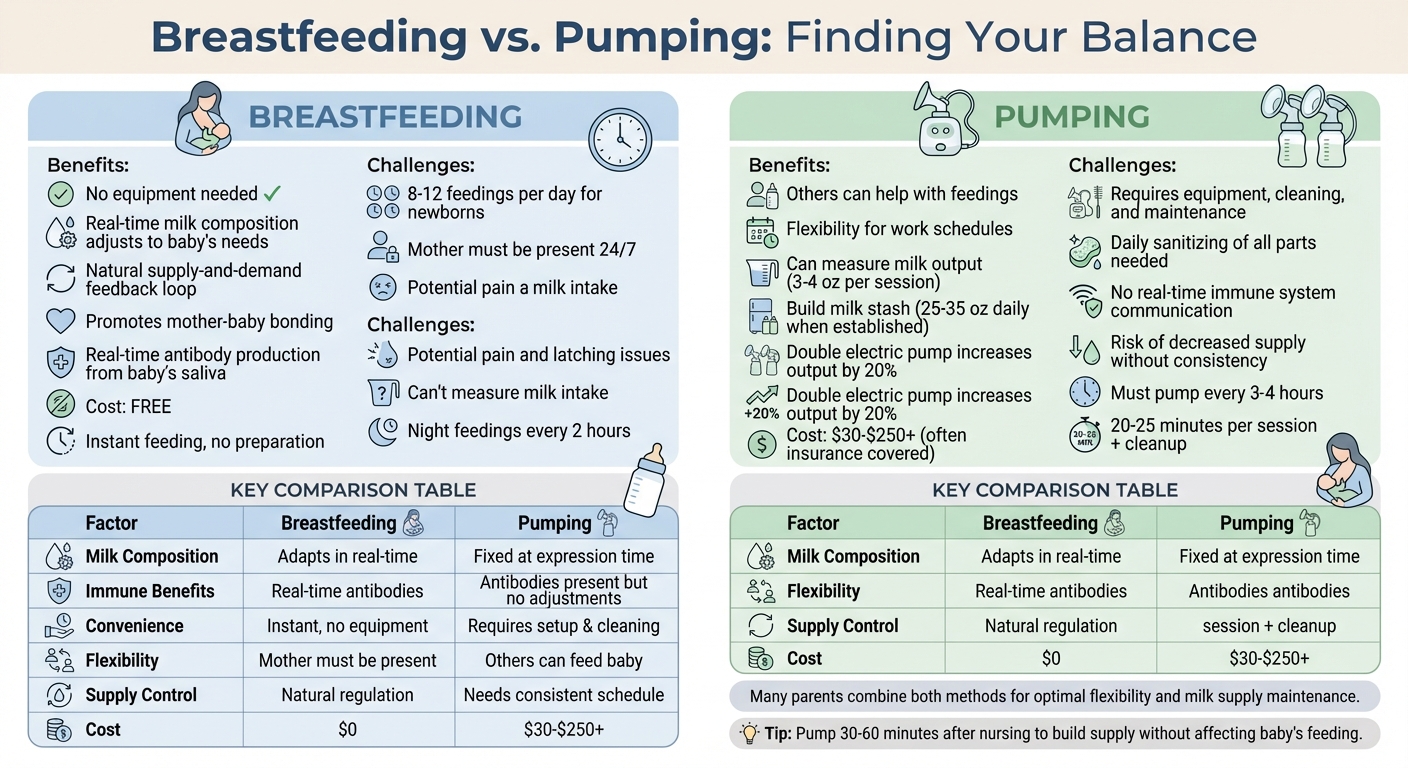
Breastfeeding vs Pumping: Complete Comparison Chart
Benefits of Breastfeeding
Milk Composition and Immune Support
Breast milk is designed to meet your baby's needs, adapting as they grow and even changing throughout the day to provide the right balance of nutrients and antibodies. One of the most fascinating aspects of breastfeeding is the two-way communication between mother and baby. When your baby's saliva comes into contact with your breast, it sends signals to your body, prompting the production of specific nutrients and antibodies that address your baby's immediate needs.
As the CDC notes:
Breast milk is the best source of nutrition for most babies. As the baby grows, the mother's breast milk will change to meet the baby's nutritional needs.
This dynamic adaptability helps shield your baby from common illnesses like ear infections, stomach bugs, and respiratory infections. It also lowers the risk of conditions such as asthma, obesity, type 1 diabetes, and SIDS For mothers, breastfeeding offers long-term health benefits, including reduced risks of breast and ovarian cancer, type 2 diabetes, and high blood pressure.
No Equipment Needed and Lower Costs
Breastfeeding doesn’t come with the recurring costs associated with formula feeding. There’s no need to buy formula, replace pump parts, or sterilize bottles. While pumping equipment can range from $30 for a manual pump to over $250 for an electric one, direct nursing is entirely cost-free. It also saves time by eliminating the extra steps involved in preparing and cleaning bottles.
Mother-Baby Connection and Supply Response
Direct breastfeeding creates a natural feedback loop, adjusting milk supply based on your baby's demand. The more your baby nurses, the more milk your body produces, ensuring just the right amount without causing oversupply. Nursing also stimulates the release of oxytocin, a hormone that helps your uterus contract back to its pre-pregnancy size and reduces postpartum bleeding. Additionally, the skin-to-skin contact during feeding fosters a sense of relaxation and emotional bonding for both mother and baby.
While direct nursing offers these unique benefits, pumping can also be a practical alternative with its own advantages.
Bottle or Breast? The Health Impacts of Nursing vs. Pumping Explained!
Benefits of Pumping
Breastfeeding naturally adapts to your baby's needs, but pumping offers practical solutions that align with the demands of modern parenting.
Options for Working Mothers and Shared Feeding
Pumping allows you to maintain your milk supply even when you're working or studying. Thanks to the PUMP for Nursing Mothers Act, U.S. employers are required to provide reasonable break times and a private, non-bathroom space for expressing milk during the first year postpartum. This support ensures that mothers can continue providing breast milk without compromising their careers.
It also opens the door for others - like partners, grandparents, or childcare providers - to take part in feedings. This can be a game-changer for sharing nighttime wake-ups and giving you some well-deserved rest. Using a double electric pump, which can express milk from both breasts in just 20–25 minutes, can increase milk output by about 20% compared to single pumping. For added convenience, hands-free or wearable pumps let you multitask while expressing milk.
"A plan for how you'll continue to provide breast milk for your child will put you on the path to success."
These tools and strategies make it easier to efficiently manage and sustain your milk supply.
Building a Milk Supply and Managing Production
Once your milk supply is established - typically around 3 to 4 weeks postpartum - you can expect to produce about 25–35 ounces daily, with each session yielding around 3–4 ounces. Expressed milk can be stored safely in the refrigerator for up to 4 days or frozen at 0°F or colder for 6 to 12 months.
To prepare for returning to work, start building your milk stash 2 to 3 weeks in advance. Pumping in the early morning, about an hour after your first feeding, often produces the highest milk volume. Adding extra sessions or using power pumping techniques can also help increase your supply.
Control Over Feeding Times
Pumping gives you the freedom to plan feedings around your schedule, making it easier to balance daily responsibilities. For example, you can align pumping sessions with childcare schedules to streamline your evenings. This flexibility allows you to attend appointments, travel, or simply enjoy personal time without disrupting your baby's feeding routine.
Most health insurance plans cover the cost of a breast pump, with prices ranging from around $30 for manual pumps to over $250 for electric models. This makes pumping a more accessible option for many families. Such flexibility complements the hands-on benefits of breastfeeding while adapting to the realities of a busy lifestyle.
Downsides of Breastfeeding
Breastfeeding, while offering numerous benefits, does come with its share of challenges that can impact daily routines and overall well-being.
Time Demands and Frequent Feedings
Newborns typically nurse between 8–12 times a day. This frequent feeding schedule is crucial for building and maintaining milk supply but can leave little room for a predictable routine. Many babies also engage in cluster feeding during the evenings, and growth spurts can lead to even more frequent nursing sessions as they signal the need for increased milk production. Following a rigid timetable often isn’t practical; instead, recognizing early hunger cues is more effective. Breastfeeding counselor Emma Pickett captures this sentiment perfectly:
Why should a watch or clock tell me how to be a mother? I'd rather pay attention to my baby.
These irregular feeding patterns can take a toll, both physically and emotionally, as discussed below.
Pain and Latching Challenges
Breastfeeding can be uncomfortable, especially in the early days. Sore nipples, engorgement, and latching issues can turn feeding into a painful and frustrating experience. When breasts become overly full, it may be harder for your baby to latch properly, creating a cycle of discomfort. Additional complications like poor positioning, tongue-tie, mastitis (a breast infection), or vasospasm (a condition where nipple arteries constrict) can make the process even more difficult.
Interestingly, over 89% of parents who exclusively pump report doing so after encountering difficulties with direct breastfeeding. For persistent pain or problems, reaching out to an International Board Certified Lactation Consultant (IBCLC) can help address these issues and improve the overall experience.
But beyond physical discomfort, the constant feeding demands place a significant burden on the mother.
Feeding Responsibility Falls Solely on the Mother
As the primary source of nutrition, breastfeeding mothers must be available around the clock. Night feedings, which often occur every two hours, can lead to exhaustion. On top of this, mothers need to monitor their diet and medications carefully. Unlike bottle-feeding, where intake can be measured, breastfeeding sometimes leaves you questioning whether your baby is getting enough milk. Healthline aptly describes the mental and physical toll:
Being awake every 2 hours to ensure your baby has sufficient food can be hard mentally and physically after having just given birth.
This constant responsibility can feel isolating, highlighting the importance of finding ways to share caregiving duties and prioritize self-care. Understanding your postpartum body is a key part of that recovery.
Downsides of Pumping
While pumping can offer convenience and flexibility, it also comes with its own set of challenges that can feel daunting, especially when juggling the demands of life with a newborn.
Equipment Requirements and Maintenance
One of the biggest hurdles with pumping is the upkeep. After every session, you need to disassemble all parts that come into contact with milk - flanges, valves, membranes, connectors, and bottles - and wash them thoroughly in warm, soapy water. Small parts, like valves, can be particularly tricky to clean, and any leftover milk residue can become a breeding ground for bacteria.
Sanitizing these parts daily is another essential step. You can do this by boiling them for five minutes or using the sanitize cycle on a dishwasher. Be mindful of the tubing, too - trapped moisture can lead to mold, which may require immediate replacement. As Dr. Kelly Colden, an FDA Obstetrician-Gynecologist, points out:
"Even if a used device looks really clean, potentially infectious particles may survive in the breast pump and/or its accessories for a surprisingly long time".
To minimize contamination risks, always wash your hands for at least 20 seconds before handling pump parts. Use a separate wash basin for cleaning infant feeding items, and let all parts air-dry completely on a clean towel. This meticulous routine highlights the extra effort pumping requires compared to direct breastfeeding.
Missing Direct Immune System Communication
Breastfeeding isn't just about feeding - it’s a dynamic process where your body adapts to your baby's needs in real time. When breastfeeding directly, your baby's saliva interacts with your body, triggering the production of antibodies tailored to their immune system. Pumped milk, however, misses out on this unique biological exchange.
To make pumping more effective, you can try stimulating the let-down reflex by looking at photos of your baby or keeping a familiar item nearby. Still, without that direct immune signaling, even small changes - like missing a pumping session - can have a noticeable impact on milk production.
Risk of Decreased Milk Production Over Time
Many mothers notice their pumping output starts to decline after a few weeks. Milk production works on a supply-and-demand basis: if milk isn’t removed frequently and efficiently, your body gets the signal to slow down production [33,35]. Jacque Ordner, IBCLC at Motif Medical, explains:
"If milk is not removed frequently enough, the concentration of FIL increases, telling the breasts to slow milk production".
To keep your supply steady, aim to pump 8 to 12 times within a 24-hour period, targeting at least 17 ounces daily by the end of the first week or so [34,35]. Using the right flange size is also crucial - your nipple should move freely within the flange tunnel to ensure optimal milk flow [32,34]. If your supply starts to dip, try power pumping: pump for 20 minutes, rest for 10, pump for another 10, rest again for 10, and finish with another 10 minutes of pumping. This mimics the cluster feeding pattern of a baby and can help boost production.
Balancing direct breastfeeding with pumping sessions can be key to maintaining your milk supply while still enjoying the flexibility that pumping provides.
Breastfeeding vs. Pumping: Side-by-Side Comparison
Understanding the pros and cons of breastfeeding and pumping can help you decide which method - or combination - suits your needs best.
One of the most notable differences is in milk composition and immune support. Breastfeeding offers real-time immune benefits triggered by the baby's saliva, while pumped milk provides a consistent level of antibodies but lacks the dynamic immune response direct breastfeeding delivers.
Convenience and flexibility are also key considerations. Breastfeeding is ideal for immediate feeding - no need for equipment, preparation, or warming bottles. On the other hand, pumping gives you more freedom by enabling others, like partners or caregivers, to handle feedings. This can be especially helpful for working parents. However, pumping requires extra effort for cleaning, assembling equipment, and storing milk.
Here’s a side-by-side look at the key differences:
|
Factor |
Breastfeeding |
Pumping |
|---|---|---|
|
Milk Composition |
Adapts to the baby's needs, changing with time of day and age |
High quality but fixed at the time of expression |
|
Immune Benefits |
Provides real-time antibody production based on baby’s saliva |
Contains antibodies present during pumping but no real-time adjustments |
|
Supply Control |
Naturally regulated through a supply-and-demand feedback loop |
Requires consistent pumping to mimic baby’s feeding patterns |
|
Convenience |
Instant feeding with no equipment or preparation needed |
Involves pumps, bottles, and storage bags, plus cleaning and setup |
|
Flexibility |
Limited; the mother must be present for feedings |
Offers more freedom as others can participate in feedings |
|
Cost |
Free |
Ranges from $30 to $250+ for pumps, though insurance often covers the cost |
This comparison highlights how each method has its strengths and challenges, making it easier to weigh your options or consider a mix of both approaches.
Combining Breastfeeding and Pumping
Blending breastfeeding with pumping can help maintain milk supply while adapting to the demands of daily life. For many parents, this combination offers the best of both worlds: consistent milk production and flexibility in caregiving.
Pumping After Nursing to Increase Supply
One of the most effective ways to boost milk supply is to add pumping sessions after breastfeeding. Here’s why it works: milk production follows a supply-and-demand system. The more milk you remove, the more your body is prompted to produce. To build a freezer stash without affecting your baby's feeding needs, try pumping 30 to 60 minutes after nursing. This timing ensures your baby gets their full feed while signaling your body to make extra milk.
Pump for 10 to 15 minutes after each nursing session to fully empty your breasts. Continue for 2 to 5 minutes after milk stops flowing - this tells your body to increase production. Many parents notice an increase in supply within about three days of consistent post-nursing pumping.
"Breast milk production generally works on supply and demand. The more milk is drawn out, the more milk your breasts may potentially make." – Catherine Crider, Healthline
Morning is often the best time to pump since milk supply tends to peak early in the day. If you’re building a stash, try pumping about an hour after the first morning feed. For those struggling with low supply, power pumping can help. This technique mimics a baby’s cluster feeding: pump for 20 minutes, rest for 10, pump for 10, rest for 10, and pump another 10 minutes. Doing this once a day for about a week can yield noticeable results.
Once you’ve boosted your supply, the next step is setting up a pumping schedule that fits your daily routine.
Creating a Flexible Schedule
A good pumping schedule aligns with your baby’s natural feeding patterns and helps keep your milk supply steady. By the time your milk supply is fully established - usually around 3 to 4 weeks postpartum - most parents produce 25 to 35 ounces per day. If you’re away from your baby, aim to pump every 3 to 4 hours to maintain supply and avoid engorgement.
"Try to keep to the same basic schedule that you would if you were with your baby. Do what your body is used to doing." – Marie Lattarulo, RN, IBCLC, Cleveland Clinic
If you’re working, nurse your baby right before drop-off and immediately after pickup. This can reduce the number of pumping sessions needed during work hours. A typical pumping session, including setup and cleanup, takes about 20 to 25 minutes. Once your supply is established, most parents express 3 to 4 ounces per session.
As your baby grows, you might try spacing out pumping sessions. Lactation consultant Nicole Peluso advises monitoring your output during this process: "The only way to know if you are able to maintain a healthy supply with fewer sessions is to try to and monitor your output". If your supply dips, it’s a sign to increase the frequency of your sessions.
Tactile Stimulation During Pumping and Tracking Output
To get the most out of pumping, focus on technique and comfort.
Using tactile stimulation - such as massaging or stroking your breasts - while pumping can help you express more milk and improve flow. Applying warm, moist compresses before pumping can also help by opening milk ducts and encouraging better milk release.
When you’re away from your baby, sensory triggers can make a big difference. Looking at photos or videos of your child, smelling their clothing, or listening to soothing music can help stimulate oxytocin, which aids in milk let-down. These small steps can noticeably improve milk flow and volume.
For parents who need to track milk output - such as those with preterm infants or demanding work schedules - a healthy production rate is about 1 to 2 ounces per hour. Using a double electric pump can increase milk expression by nearly 20% compared to pumping one breast at a time. Proper pump flange fit is also crucial; an ill-fitting flange can lead to nipple pain and inefficient milk removal, which may reduce supply over time.
Finally, stay hydrated and keep light snacks on hand during pumping sessions to support your body’s milk production. Consistency is key - finding a routine that works for you and sticking with it will help you maintain a healthy supply while enjoying the flexibility of combining breastfeeding and pumping.
Conclusion: Choose What Works for You
Feeding your baby isn't about sticking to one rigid method - it’s about finding a balance that fits your life and supports both you and your baby. Some mothers feel comfortable with exclusive breastfeeding, while others discover that pumping, or a mix of both, works better for their schedule, comfort, or family needs. Whether you're navigating a return to work, sharing feeding responsibilities, handling latching issues, or addressing nursing discomfort, the goal is to choose what aligns with your lifestyle and well-being.
The key to maintaining milk supply is consistency - aim to remove milk every 3 to 4 hours. To create a plan tailored to your needs, consider consulting a lactation expert. If you're preparing for a return to work, start practicing pumping and introducing a bottle 2 to 4 weeks ahead. This will help build a freezer stash and allow your baby time to adjust.
"Hold baby skin to skin and get some rest whenever possible."
– Lauren Crosby, M.D., F.A.A.P., Pediatrician
Whether you choose breastfeeding, pumping, or a combination of both, the focus is on what helps you and your baby thrive. Trust your instincts, listen to your body, and remember: fed is best. No matter the method, you're making the best choice for your family - and that’s what truly counts.
Sending hugs,
rumbly 💜
FAQs
How can I balance breastfeeding and pumping to support my milk supply?
Balancing breastfeeding and pumping while keeping up your milk supply can feel like a juggling act, but it’s absolutely doable with a bit of planning. Start by breastfeeding your baby first. This not only encourages natural milk production but also ensures your baby gets the nourishment they need. Afterward, pump to fully empty your breasts - this mimics your baby’s feeding rhythm and signals your body to produce more milk.
Sticking to a consistent pumping schedule is crucial. Aim to pump at regular intervals, especially during times when your baby would typically nurse. Beyond that, staying hydrated, eating nutritious meals, and sneaking in rest whenever possible can make a big difference in maintaining your milk supply.
For added convenience, keep your pumping gear organized and within easy reach. Having everything ready to go can save time and reduce stress, making the process smoother.
It’s important to remember that finding the right balance is a journey. Give yourself grace as you figure out a routine that works best for both you and your baby.
How can I keep my pumping equipment clean and hygienic?
To keep things clean and safe, make sure to wash your hands thoroughly with soap and water for at least 20 seconds before touching any pumping equipment. After each session, take apart all parts that come into contact with breast milk - like flanges, bottles, and tubing - and rinse them under running water. You can wash these parts with soap and warm water or, if they’re labeled dishwasher-safe, pop them in the dishwasher for convenience.
It’s also important to check your equipment regularly. If you notice any parts that are cracked, worn out, or showing signs of mold, replace them immediately to avoid bacteria buildup. For extra precaution, disinfect surfaces like countertops and pump dials, especially when pumping in shared or public areas. These simple habits not only protect your baby but also help maintain a steady milk supply.
Does pumping provide the same immune benefits as breastfeeding?
Breast pumping is an effective way to provide milk for your baby, but it doesn't replicate the immediate immune benefits that come from direct breastfeeding. During nursing, your baby's saliva communicates with your body, helping it create antibodies and live immune cells specifically designed to meet your baby's current needs.
Though pumped milk still delivers vital nutrients and components that support immunity, the unique, real-time exchange of immune information between mother and baby only happens with direct breastfeeding. Both approaches offer value, so figuring out what works best for you and your baby is essential.